Where You Stay: Hotels on a Spain 360 Tour
12 min read
You sleep in a hotel. Spain 360, the name on the trip, is 360 Travel S.L. in Zaragoza, and the rooms we book are three-, four-, and five-star hotels with a private bathroom. Published small-group routes use a solid three- or four-star base. A five-star is an upgrade when you want it and when that building has a room, confirmed in writing, not a surprise marble lobby on the last night. The page that explains this is /casas. The word in the address is not the product. We do not book casas particulares. We do not book all-inclusive resort towers. On a small-group departure everyone sleeps in the same hotel, because the morning minibus has one door to knock on.
Stars, and what a published trip actually uses
A three-star in the right street beats a five-star beside a ring road. We mean a clean room, a real bed, a private bath, and a location you can walk home from after dinner. On the Southern Spain Express, the Heart of Spain route, and the Grand Tour, that is the standard: a reliable three- or four-star that the guide can reach at the hour the Alhambra or the AVE requires. You are not collecting loyalty points in a business park. If a building is tired, we stop using it. If a building is perfect and sits forty minutes from the cathedral in rush hour, we do not use it for a first night in Seville either.
Upgrades are a conversation, not a vibe. If you want a five-star, say so when we quote. We check whether a five-star exists in the neighborhood the day needs. A palace hotel facing the Alhambra can be the right upgrade in Granada. A five-star by the airport is the wrong upgrade on every city except the night before a dawn flight you asked to protect. When the room is available, we confirm the category and the price in writing. When it is not, we say so and keep the four-star you can walk from. We do not promise a specific suite months out and then hope.
Why the exact building comes later
Hotels sell rooms to other people. A building we like in Santa Cruz can be full on your October dates because a fair, a conference, or simply a busy weekend got there first. So the itinerary you fall in love with names the city, the neighborhood standard, and the category. The exact property is confirmed closer to departure, in writing, before you fly. That is not vagueness. It is how allotments work. You will not arrive to a mystery. You will receive a name, an address, and a way to tell a taxi driver where to stop.
If we have to move you, the move is to a comparable hotel in the same kind of location, and you hear about it before you pack. Comparable means walkable Seville for walkable Seville, not a swap from the cathedral to an industrial estate because the industrial estate had a chandelier. On a private trip the same rule holds, with more room to aim at a specific building if you are loyal to one and it has space. On a small group, the whole group moves together. We will not split the twelve across two hotels to save a favorite room for one couple. Pickup in the morning is the point of the shared address.
One hotel, one pickup
Small groups are capped at twelve. The guide collects you from one lobby. That is why we do not book a different hotel for every couple in the same van, and why a request to “stay somewhere more romantic, just us, and meet at the monument” is really a request for a private tour. Romantic is available. It is available as a private quote, or as an upgrade of the whole group’s building when the building can take all of us. It is not available as a scavenger hunt at 7:45 a.m. on Alhambra day. The group that slept together leaves together. If you want two nights on your own in Seville before the date starts, book them, tell us the address, and we will set the pickup for the morning you join.
The room itself is a private room with a private bath. We do not book shared bathrooms down a hall. Air conditioning matters from June onward in Seville, Córdoba, Granada, and often Madrid. A pretty old building with a weak unit is a real complaint in August, and we would rather you test the machine when you arrive and call the desk than suffer on principle. In the north, in San Sebastián or along the Galician coast, the same week can be cool, and the issue is heat that works. Tell us the month. We already know it. Say it anyway if you run cold or hot, because a June evening in Zaragoza or Madrid is not a June evening on the Bay of Biscay.
- Seville: Santa Cruz or another walkable center, so the cathedral and the river are a walk after dinner.
- Granada: decide Albaicín lanes versus a hotel a taxi can reach. Luggage and knees vote first.
- Madrid: Huertas, the Prado side, or Ópera. Not a business park on the way to Barajas.
- Barcelona: the Eixample if you want a grid and an elevator, the Gothic Quarter or El Born if you want the old streets and accept the stairs.
- Valencia: within reach of the old town and Mercado Central, unless the night is deliberately at the beach.
- Palma: the old town and the cathedral, if Mallorca is on the route. A closed resort bay is a different holiday.
Seville and Granada, where the street decides
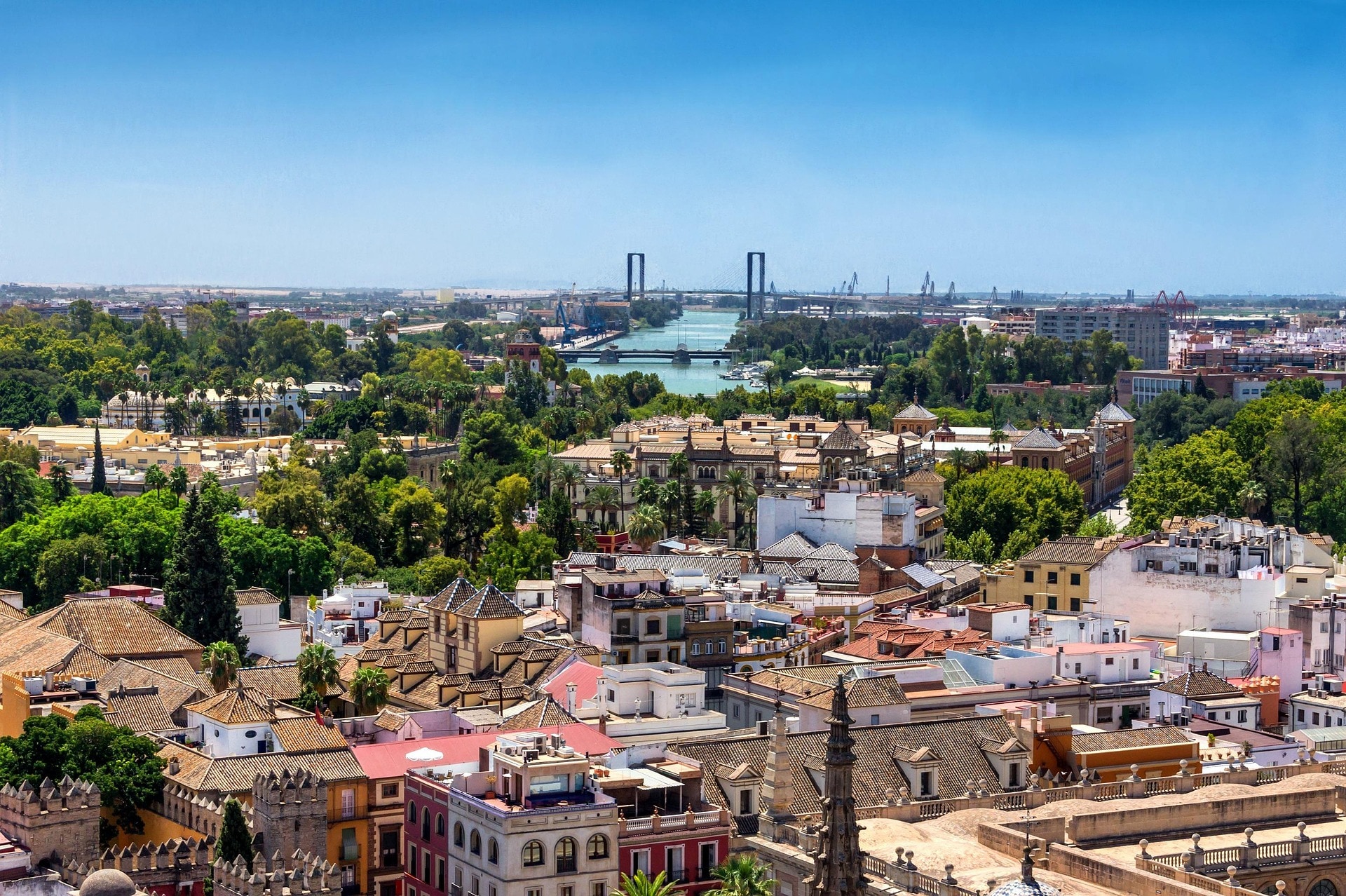
In Seville, Santa Cruz puts you in lanes that reach the cathedral, the Alcázar, and the gardens. It is the right neighborhood for a first stay, and it is full of old buildings. Some have no elevator. Some have a car drop a street away because the lane is too narrow. El Arenal, toward the river and the bullring, is often easier for a vehicle and still walkable to the center. Triana is a fine evening across the Puente de Isabel II, with its own bars and Mercado de Triana in the morning. It is a worse hotel choice if you have an early pickup and you dislike starting the day with a bridge and a suitcase. We default to the walkable center. We change that if you tell us the bridge is the part you came for.
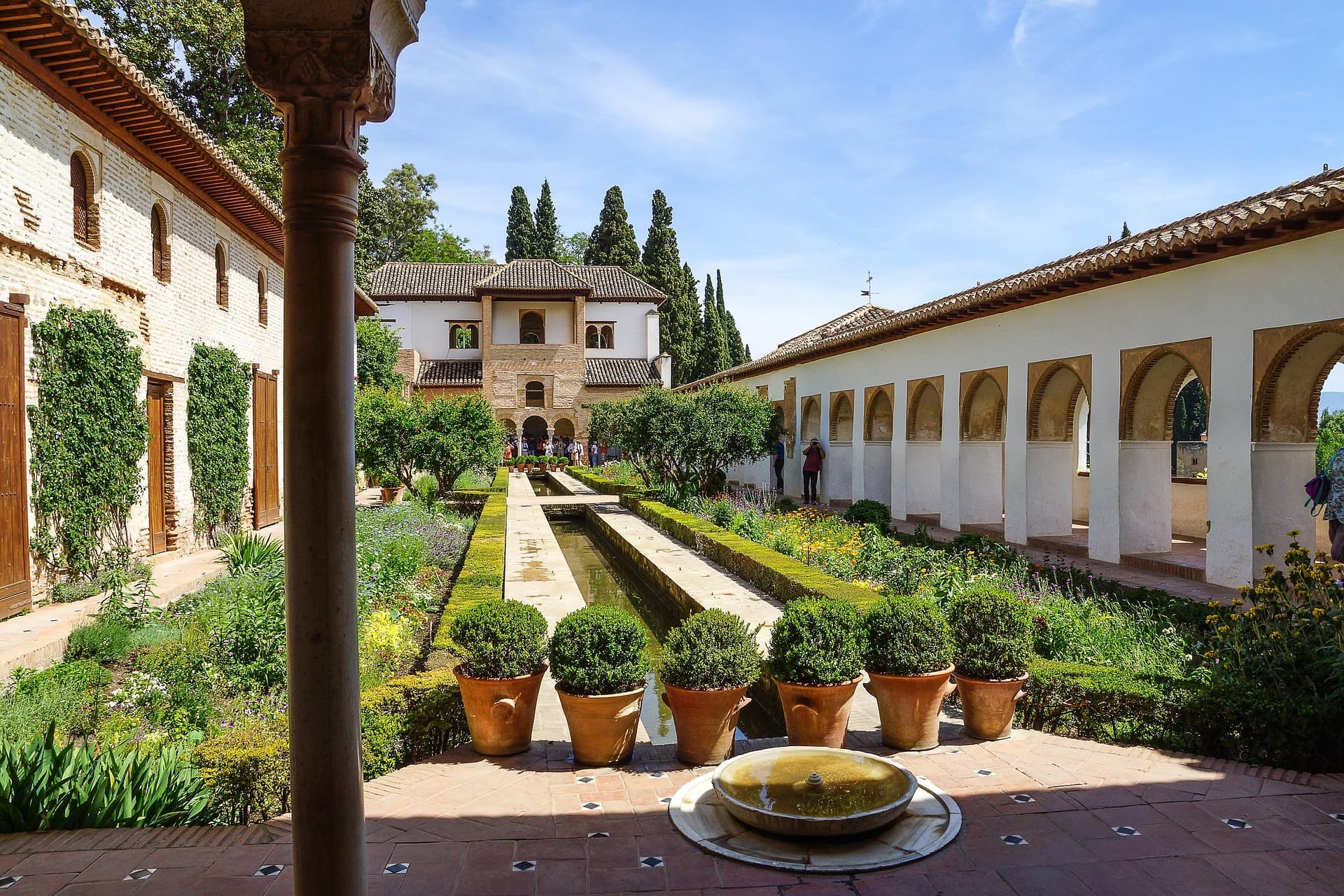
Granada is the luggage test. The Albaicín is beautiful, steep, and cobbled. Taxis stop where the lane stops. A room with a view of the Alhambra can mean three flights and a suitcase you regret. The Realejo is usually kinder to knees and still close to Plaza Nueva. A hotel on the Alhambra side can be perfect if the view is the reason and you accept a transfer up to the ticket gate rather than a stroll from a flat street. There is no universal winner. There is a question: can everyone in the party do stairs, yes or no? Answer it before we confirm. A group of twelve with one person who cannot do the Albaicín will not be booked into the Albaicín. The palaces do not require you to sleep on a hill.
Four neighborhoods, and the ones we refuse
Location is the amenity. Marble in the wrong district is not an upgrade.
| City | Stay here | Do not accept this as the base |
|---|---|---|
| Madrid | Huertas and the Paseo del Prado, or Ópera near the palace | A business hotel on the edge, unless the flight is dawn and you asked for that one night |
| Seville | Santa Cruz, El Arenal, or another walkable center | An airport hotel for a three-night stay, or a room you cannot walk home from after dinner |
| Granada | Realejo, a taxi-reachable Albaicín if you want it, or a view hotel you chose on purpose | A hill lane for a group that has not agreed to stairs and cobbles |
| Barcelona | Eixample, or the Gothic Quarter and El Born if old streets are the point | A beach tower in Barceloneta or an airport block as the whole stay |
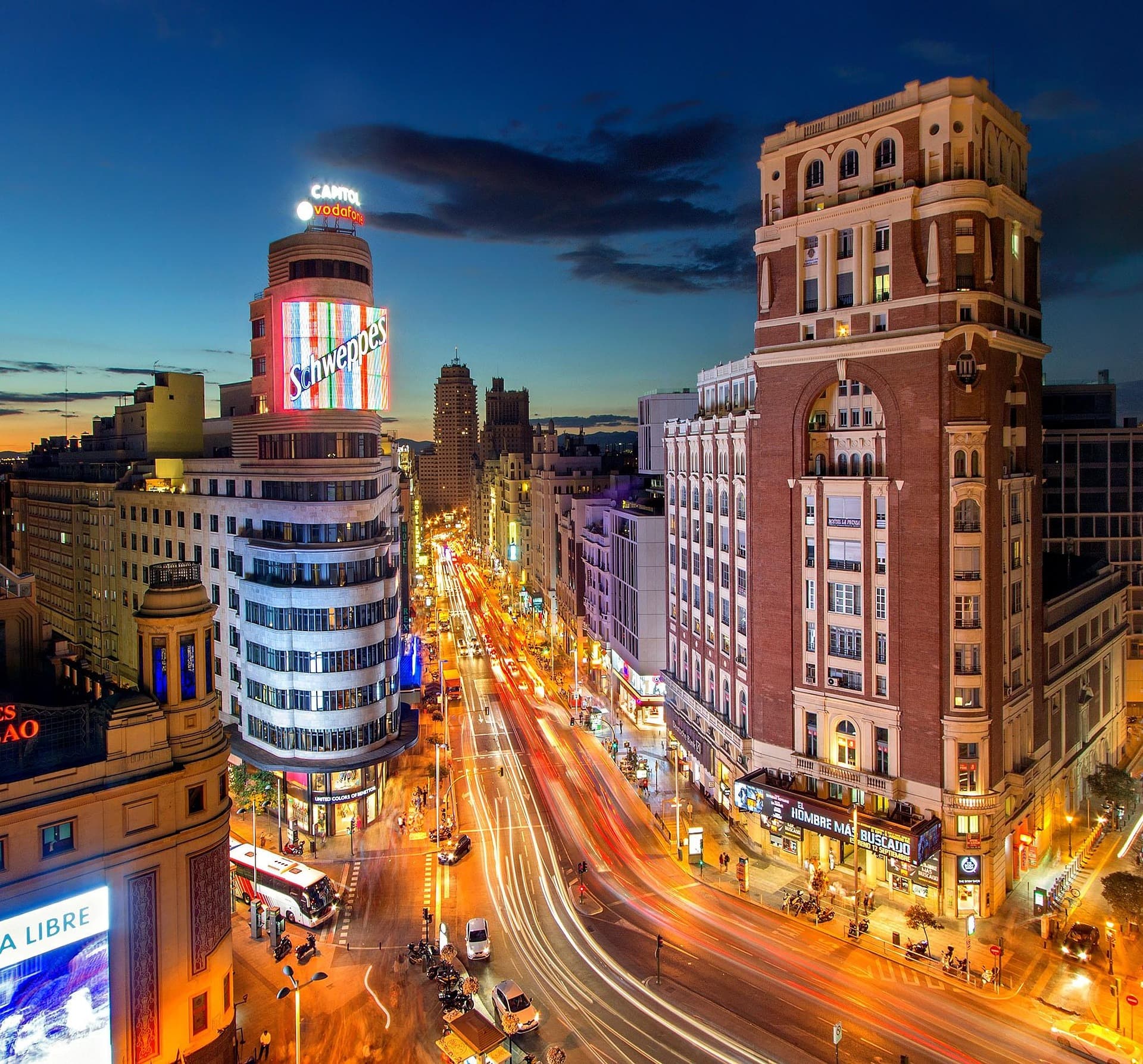
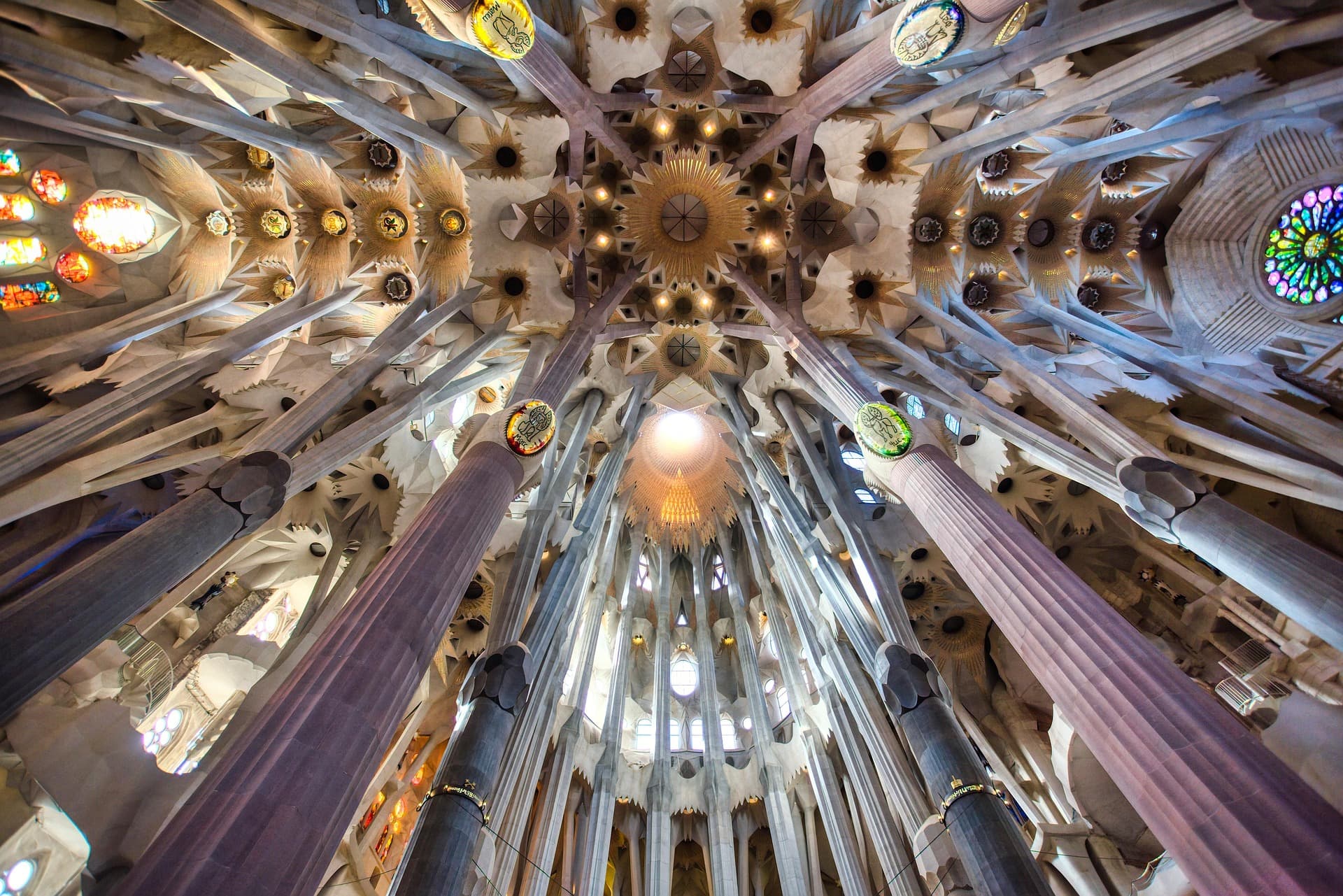
Madrid rewards a hotel you can walk out of toward the Prado or the palace. Huertas puts the museum, Santa Ana, and a cluster of bars in range. Ópera puts the palace and a calamares bar in range. Sol is convenient and louder. A business park on the A-2 saves nothing you care about on a holiday, and it costs a taxi every time you want dinner. Barcelona is the same logic in a different grid. The Eixample has elevators more often, regular blocks, and a walk or a short metro to the old town. The Gothic Quarter and El Born have the atmosphere and the old stairs, plus weekend noise. Choose with your sleep in mind. Valencia, when it is on the route, should put you within reach of the cathedral and Mercado Central. A beach night in El Cabanyal is a choice for a free afternoon, not the default before an early transfer.
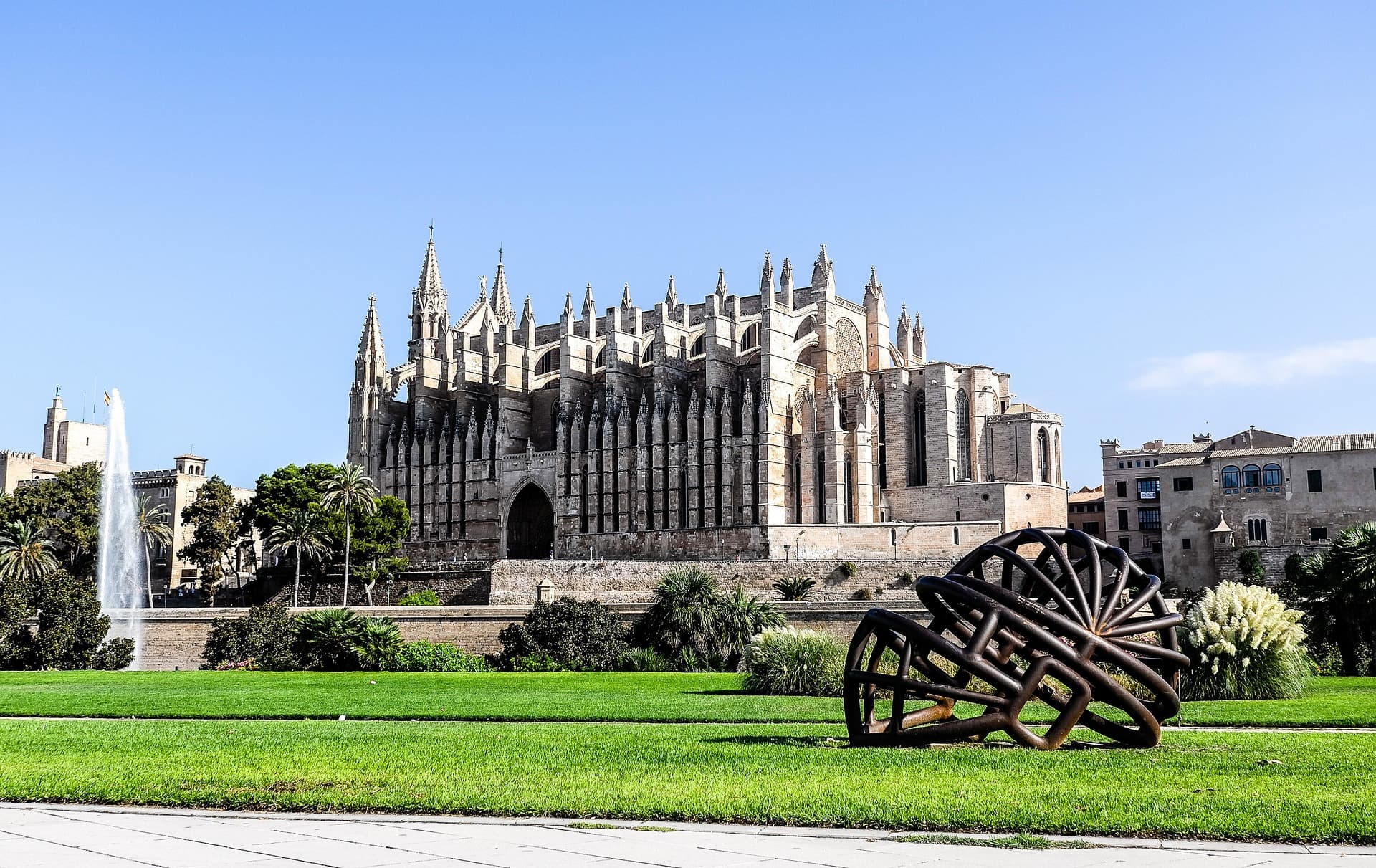
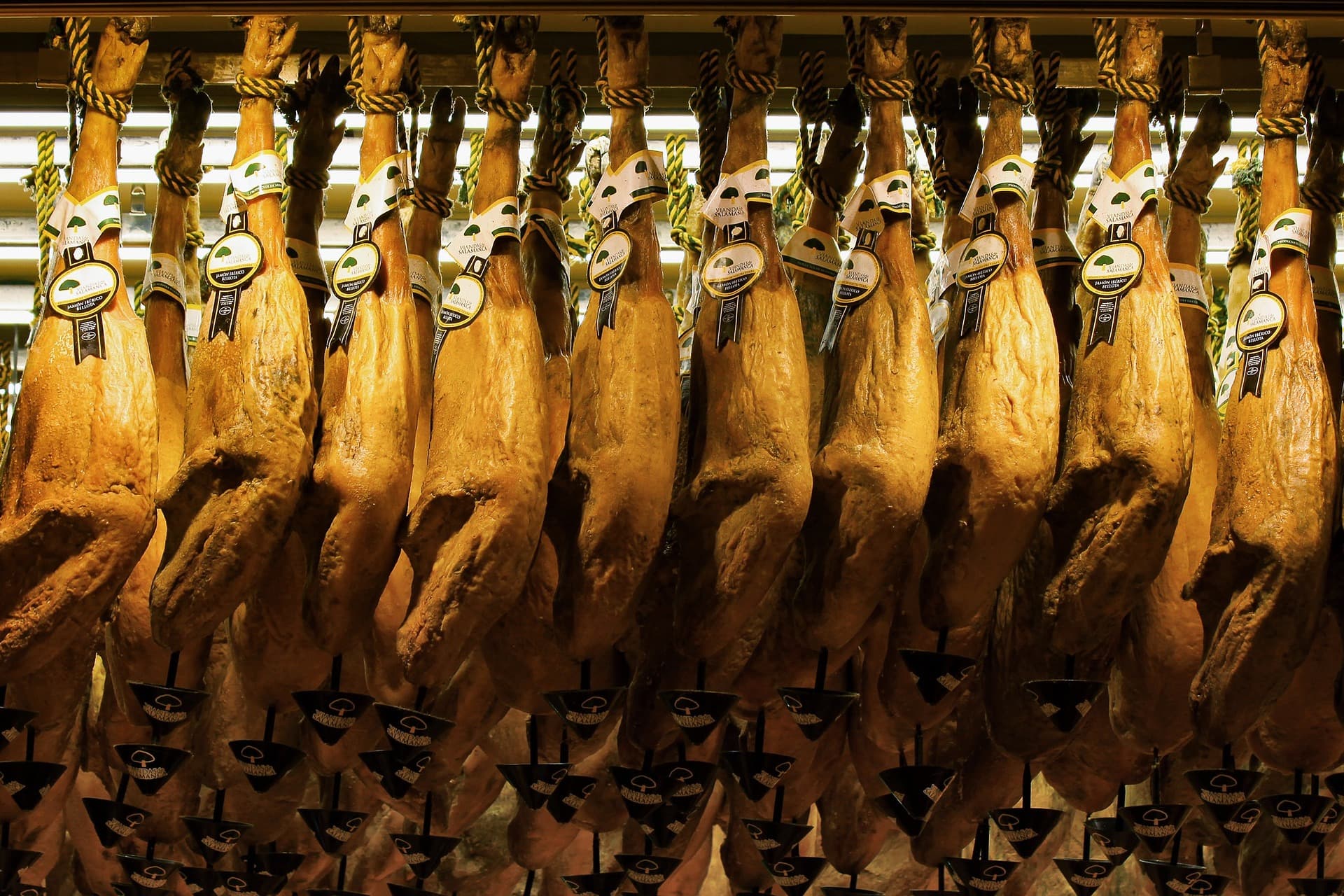
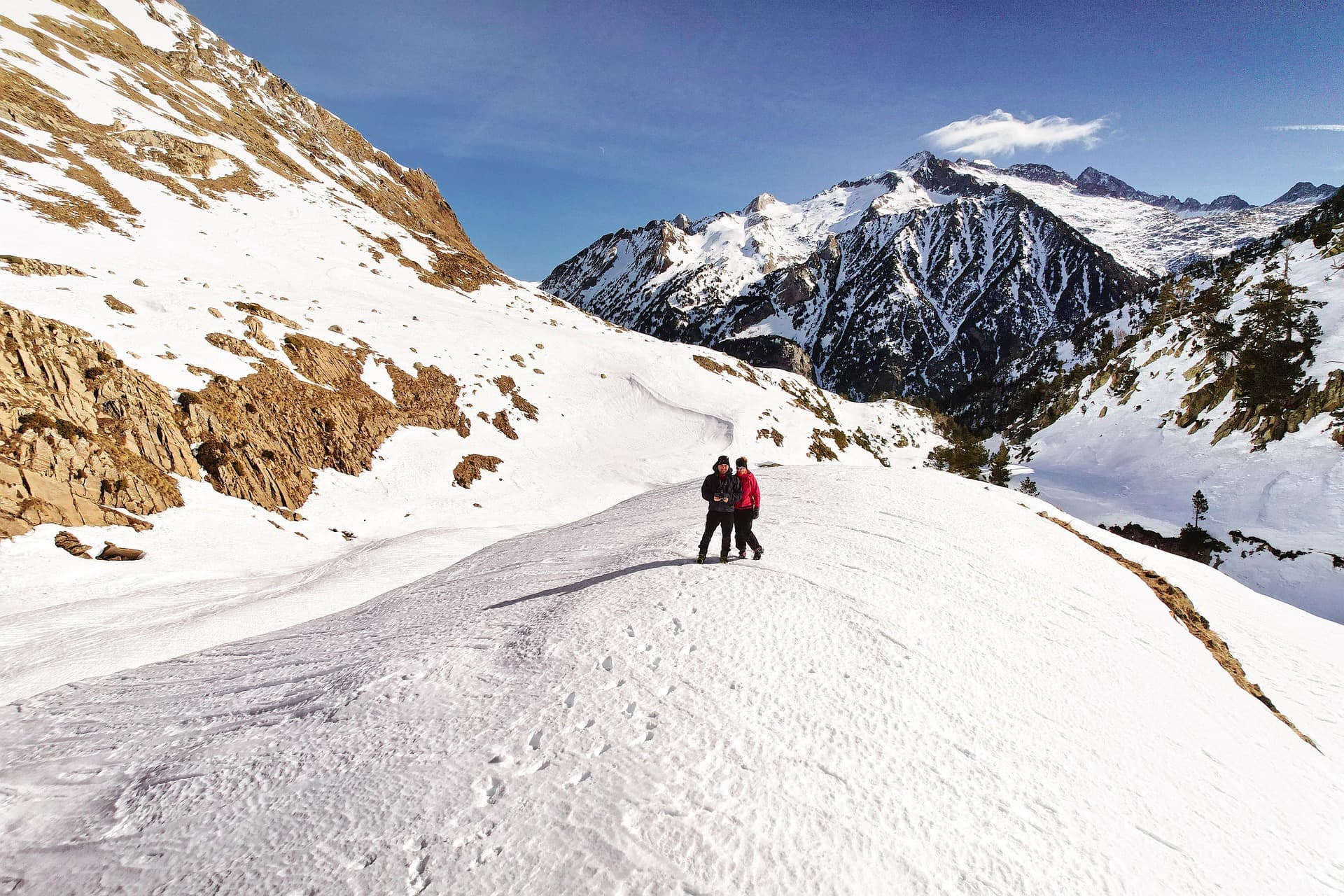
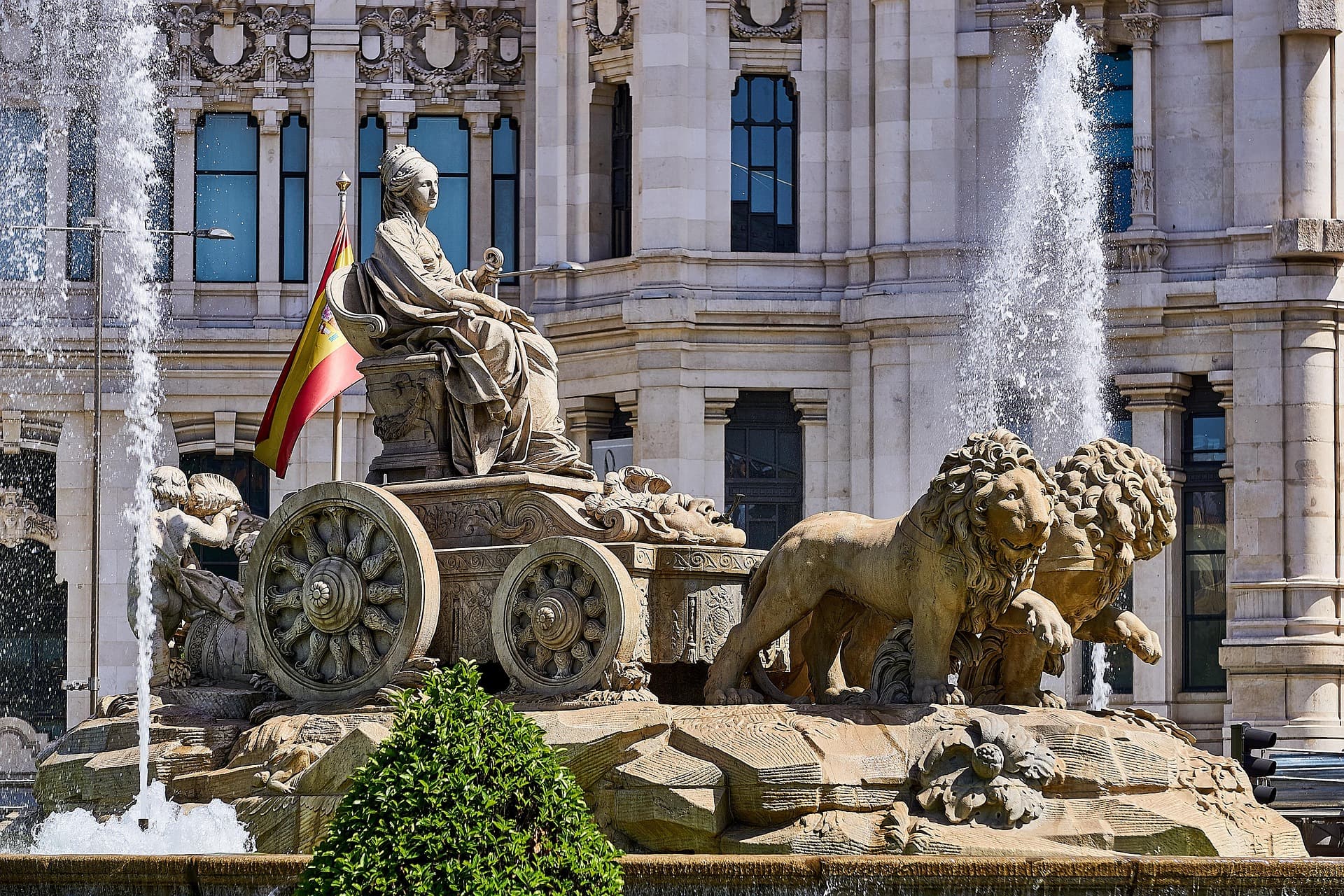
Palma appears when a route actually includes Mallorca. Stay where you can walk to the cathedral and the old town. A resort folded into a bay, with a wristband and a buffet, is the holiday we are not selling. If your trip never touches the island, ignore the photograph and judge the city you are in. The pictures in this chapter are Madrid, Granada, Barcelona, and Palma because those are streets worth sleeping near. The rule under them is the same rule as Seville: the door of the hotel should return you to the day you came for, on foot, after dinner.
Córdoba is the night people treat as a pause and then regret. The Mezquita is in the Judería, and the useful hotel is close enough to walk there at opening, which in warm months means early. Those lanes are as narrow as Santa Cruz. A car may stop a street away from the door, and a suitcase on the cobbles is the Albaicín problem at a smaller scale. If that walk is too much, say so. We will keep you in the old quarter and ask for a room a vehicle can approach, rather than a hotel by the train station that makes every visit to the mosque a transfer. Córdoba’s AVE station is for arrival and departure. It is a poor base for the mosque.
On a moving day the bags go in the van once. You are not hauling them through a station between a Seville checkout and a Córdoba check-in unless the route that day is the train and we have said so. Be packed at the hour named. Twelve people cannot search the Judería for a delayed suitcase and still make a timed entry at the Mezquita. If a late flight means you need the room past checkout, ask when we confirm the hotel. Late checkout is something the building either grants or does not. It is not a favor we can invent at noon in the lobby.
Elevators, heat, and breakfast
Historic buildings often have no elevator. Santa Cruz, the Albaicín, parts of Barcelona’s old town, and plenty of beautiful houses in Córdoba will ask you to climb. We will tell you when that is true of the confirmed hotel. You must tell us if the climb is a problem, before confirmation, not at the curb. A room on the first floor can sometimes be arranged. A different neighborhood can always be arranged if we know in time. Pride is a bad reason to spend the Granada nights angry at a staircase. Accessibility is a planning fact, like the Alhambra’s timed entry.
Breakfast splits in two. On a morning with a hard clock, you eat in the hotel: Doñana departures, Alhambra entries, any dawn the group has agreed. The hotel breakfast is there so the minibus is not waiting on a romantic search for the perfect tostada. On a morning the clock allows, a bar is often better. Café con leche and tostada con tomate in Seville, or the equivalent near Plaza Nueva, beats a tired buffet. We will say which mornings are which on the day’s plan. You do not have to attend a buffet to prove you are on holiday. You do have to be in the lobby when the ticket says so.
Dinner is not included as a concept you should invent. Some trips include some meals, and the inclusions page of that trip is the authority. What is always true is the hour. Lunch is the main meal. Dinner in Seville or Madrid starts in earnest after 8:30 or 9. A hotel restaurant that will feed you at 6:30 exists in some buildings and is the right tool if you have children who cannot wait, or a flight, or simple hunger. It is not automatically the best table in the neighborhood. Ask the guide where to walk. In Santa Cruz, in the Realejo, in Huertas, and in the Eixample, the answer is usually out the front door.
"We book hotels, then confirm the actual building in writing. A walkable door in Seville, Granada, Madrid, or Barcelona matters more than marble in the wrong district."— Spain 360, on where you sleep
Read /casas for the stay, and read it as hotels. Three, four, or five stars. A solid three- or four-star on the published group trips. An upgrade only when it exists, in writing. One building for the group of at most twelve, so pickup works. Private baths. Air conditioning that matters from June in the south. A warning, in advance, when the historic building has no elevator. Your job is to say if stairs, heat, or quiet will make the trip, and to say it before we confirm. Our job is to put the door in Santa Cruz or a walkable Seville center, in a Granada street you can live with, near the Prado or Ópera, or in the Eixample when Barcelona is the city. The lobby can be plain. The street cannot be wrong.
Plan Your Spain Trip
Talk with our Spain-based team about small-group departures, private itineraries, and straightforward travel from the US—we handle the details.
Contact UsRecommended Journey
Hotels on a Spain 360 tour
The page is called casas. The product is hotels: three, four, and five stars, one building for a small group, confirmed as a specific address before you travel.
See how you stayExpert's Tip
Tell us about stairs before we confirm the hotel. A beautiful building in Santa Cruz or the Albaicín often has no elevator, and the exact property is named in writing closer to departure.
Get the Soul of Spain in Your Inbox
Join our curated list for exclusive travel stories, hidden jazz venues, and expert guides delivered once a month.