What to Eat in Spain, Region by Region
12 min read
Spain eats late, and Spain eats seriously at lunch. Breakfast is coffee and bread. The menú del día, from roughly two until four, is the working meal: a first course, a second, bread, a drink, and often a dessert, in an ordinary bar frequently somewhere in the teens of euros. Confirm the figure on the board outside. A price printed as a national fact will be wrong next spring, and a famous dining room was never that menu. Dinner starts in earnest after 8:30 or nine, later on a summer weekend in Madrid or Seville. If you are hungry at six, you are early, not lost. Have a glass of wine, walk, and sit when the room fills. The rest of this guide is what to ask for once you are in the right city.
Three ways to order
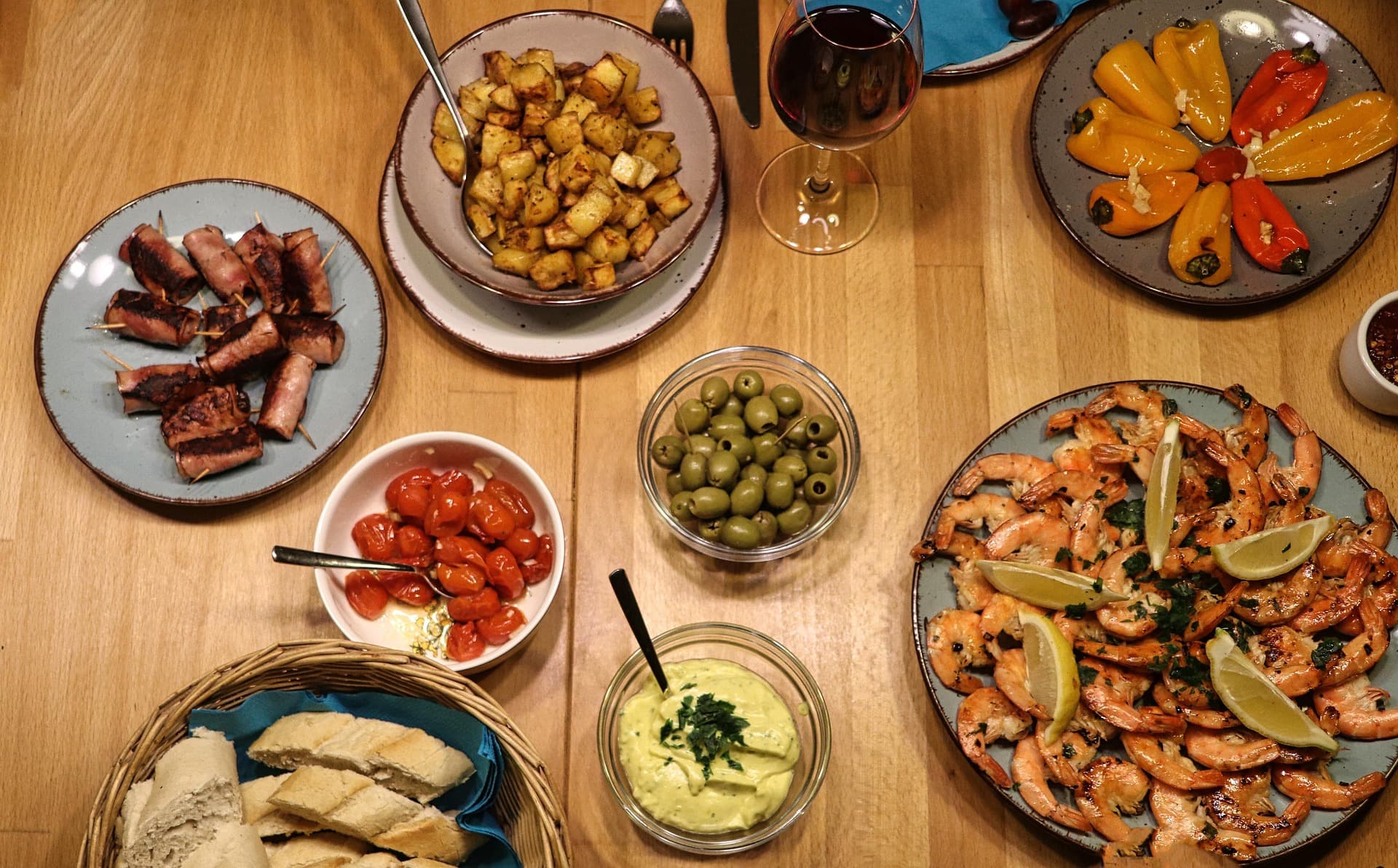
Tapas, raciones, and the menú del día are not the same object. A tapa is a small plate. A ración is a full plate, meant to share or to be dinner for one hungry person, and a media ración is the half. The menú del día is the set lunch, written on a board, and it is not the à la carte list you will see at night. If you are two people and you are actually hungry, order raciones and split them. If you are one, the menú at lunch or the bar at night will treat you more kindly than a table covered in small plates designed for a group. Pointing is allowed. So is asking what the kitchen is proud of today.
The free-plate habit is local, not national. In Granada, order a drink, a caña or a tinto de verano, and a tapa often arrives with it. Walk from Plaza Nueva through the bars, or through the Realejo, and you can make an evening of it. Do not assume a white-tablecloth restaurant owes you that tapa. Sit there and order from the menu. In San Sebastián, in the Parte Vieja, you pay per pintxo. A Gilda, the anchovy, olive, and pepper on a toothpick, has a price. Txakoli has a price. They count the sticks, or you order from a list. Madrid does not give you Granada’s deal. In Madrid you order, you pay for the plate, and you stop expecting a gift with the beer.
Madrid
Cocido madrileño is a chickpea stew with meat, and it is a lunch, often served in vuelcos: broth, then the chickpeas and vegetables, then the meats. Houses that specialize in it often cook it on a set weekday. Ask the hotel which day the neighborhood still makes a pot, and book, because this is not a walk-in at four. It is too much food to add to a museum sprint. The bocadillo de calamares is the other Madrid decision, a fried-squid sandwich around Plaza Mayor. Eat it standing or at the bar, then go to the Prado. Do not make the sandwich your only meal in the capital, and do not make cocido a tapa. Tortilla de patata is the daily test. Order a pincho at the bar with a caña. If you want the center soft, say jugosa.
Andalusia
Salmorejo is Córdoba’s cold tomato and bread cream, thicker than gazpacho, finished with egg and jamón unless you ask them to leave the ham off. You will see it year-round. Gazpacho is the thinner cold soup of a Seville summer, sometimes served in a glass, and a poor order in January. On the Cádiz coast a freiduría sells fried fish by weight: acedías, puntillitas, cazón en adobo, tortillitas de camarones. In Málaga in summer, an espeto is sardines on a skewer at a beach chiringuito. In Seville, espinacas con garbanzos is the bar plate that is not another round of meat. Before lunch in Jerez, Sanlúcar de Barrameda, or Seville, drink a cold fino or manzanilla. Both are dry. Sweet cream sherry is a different drink.
Valencia
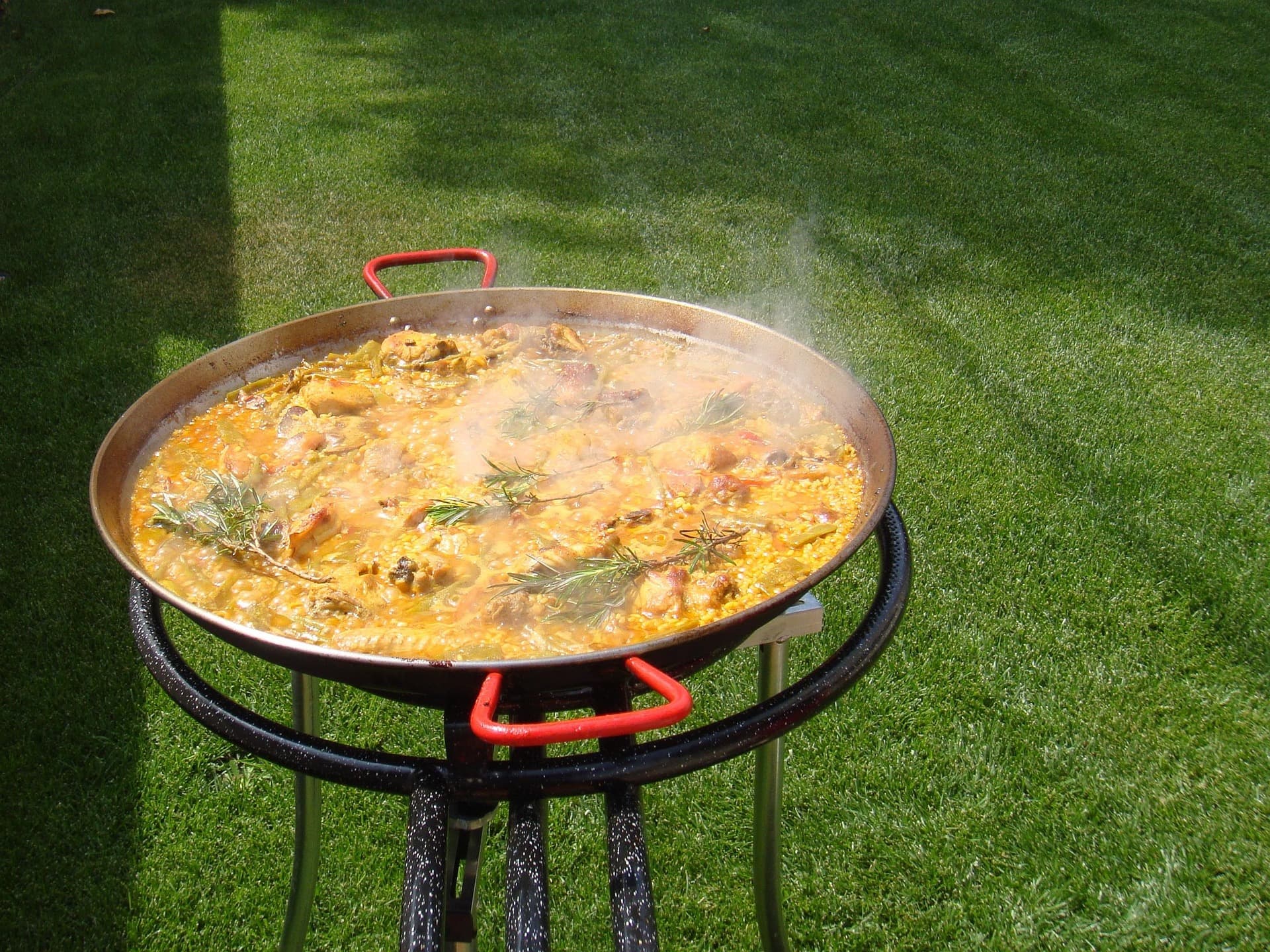
Paella is a lunch. Eat it between about one-thirty and three, in Valencia or in the Albufera villages such as El Palmar, and decide which paella you mean. Paella valenciana is chicken, rabbit, and beans, the garrofó and the bajoqueta, sometimes snails, with saffron. Seafood paella is a different order. A mixed paella is the tourist compromise. Choose on purpose. The socarrat, the toasted crust at the bottom, is wanted when it is a thin crust. A restaurant that starts a paella for one person twenty minutes before the kitchen closes will not produce the real thing. Come at the hour. All i pebre is the eel stew of the Albufera, garlic and paprika, a serious local dish and a bad surprise if you do not want eel. Say so and order the rice. In the afternoon, horchata and fartons are the cold sweet stop. Agua de Valencia, at night, is a cocktail with cava and orange, not a juice.
The Basque Country
San Sebastián charges you for the pleasure. In the Parte Vieja and in Gros you move from bar to bar, you eat a pintxo or two, you drink a small pour of txakoli, and you pay as you go. Txakoli is the local white, slightly sparkling, poured from a height in Getaria and along that coast as well as in town. A txuleta is the opposite scale: an aged beef chop, often for two, grilled, a dinner you sit down for rather than graze. Marmitako, tuna and potato, is the fishing stew when it is on the board. Cider houses around Astigarraga pour in their season, the colder months, not as a July whim. If you want that long table and that steak, put it on a night that exists, and do not expect a Granada-style free tapa beside it.
Galicia and Asturias
In Galicia, order pulpo a feira: octopus with paprika, olive oil, and potato, a ración at a pulpería. Drink albariño from the Rías Baixas by the glass if they have it, or a bottle if the table is sharing. Tetilla is the soft cow’s-milk cheese. Eat it with bread. Pimientos de Padrón come from Padrón, near Santiago. Most are mild. One is hot. Percebes, goose barnacles, are expensive and seasonal. Order them only when the price is on the board and you already wanted them.
Asturias feeds you more heavily. Fabada is a bean stew with chorizo, morcilla, and pork, a lunch in Oviedo or in Cangas de Onís. Do not plan a hard afternoon in the Picos de Europa immediately after a full bowl. Sidra is cider poured from a height, escanciada, a little at a time, drunk quickly, in a sidrería. You do not sip a bottle of it like wine. The pour is the point. Cabrales, if you want the cheese of these mountains, is a strong blue. Ask for a small piece before you commit a whole board. A group that wants fabada and a cider house should say so. A group that wants to hike should put the stew on the rest day.
La Mancha, then Extremadura
Inland, the cooking follows the year. Perdiz estofada, stewed partridge, belongs to autumn and winter in Toledo and the towns of La Mancha, not to a June terrace. Manchego is the sheep’s cheese. Ask for curado if you want it aged and firm, semicurado if you want it milder, and buy it with the DOP in mind rather than a nameless wedge. Pisto manchego is the vegetable stew that gives a lighter meal a place on the table. Saffron is grown around Consuegra and the towns nearby. It is a product. In October a harvest visit can be a real stop on a trip. It is not a dish you order by the gram at dinner. It shows up in rice and in a few stews. If you buy a tin to take home, buy it from a shop that can name the origin, not from a souvenir rack with no label.
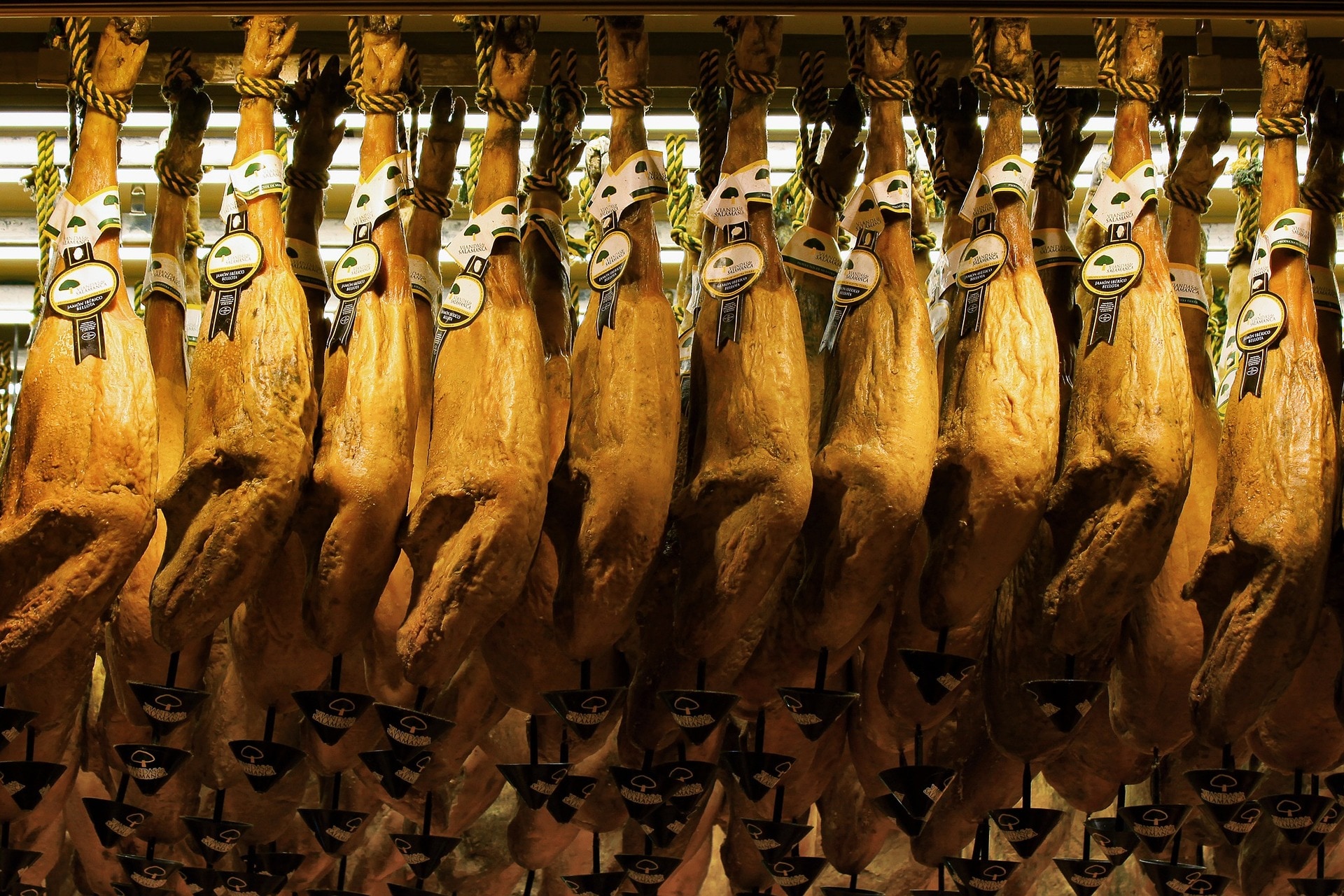
Extremadura is the dehesa on the plate. Jamón ibérico comes from Iberian pigs under holm oaks, in country you can see around Montánchez and across the province. Order a plate in Cáceres or Trujillo and eat it there. Torta del Casar, from just outside Cáceres, is the cheese you spoon. Sheep’s milk, thistle rennet, a nearly liquid center when it is ready. Cut the top, use bread, and do not expect it to behave like a firm Manchego. This lunch replaces a bad sandwich on the A-5. It does not replace a morning at Salto del Gitano. Eat after the vultures, in town, when the heat or the driving says the cliffs are done.
Jamón, in one clear distinction
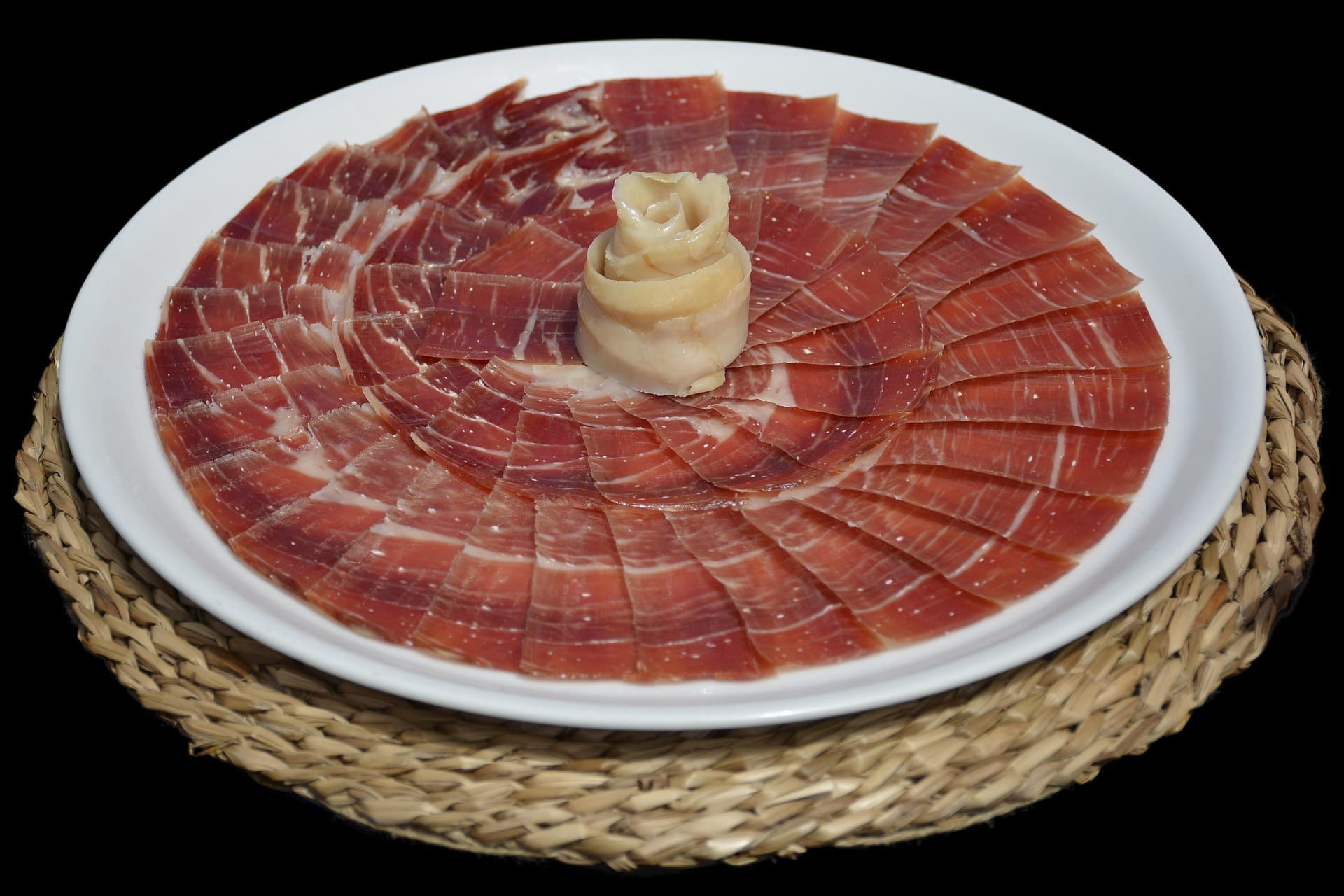
Serrano is the broad name for cured ham, often from white pigs, and a good serrano is a proper everyday plate. Ibérico means the pig is Iberian. Bellota means that pig finished on acorns in the dehesa. Cebo means it was grain-fed. The words ibérico de bellota on the label are the expensive ones, and they are worth it once, as a ración cut for you, with bread and something cold to drink. They are not worth it as your only knowledge of Spanish food if the rest of the week was a vacuum packet from a tourist shop. Buy a packet at the end if you want a souvenir and your border allows cured pork in luggage. Check that rule before you pack a leg. The meal was the plate in Cáceres, Seville, or Madrid. The plastic is optional.
- If you eat everything: one ibérico de bellota ración, ordered, not a souvenir pack as the whole experience.
- If you do not eat pork: say sin jamón. Salmorejo, salads, and some vegetable plates arrive with it by default.
- If you are vegetarian: tortilla, escalivada, cheeses, pimientos de Padrón, gazpacho, and espinacas con garbanzos are the workable list. Tell us before the trip.
- If you want the local lunch grammar: menú del día, price confirmed on the board, often in the teens of euros in an ordinary bar.
- If you are in Valencia: paella at lunch, and only the version you actually ordered.
- If you are in San Sebastián: pay per pintxo, and do not apply Granada’s rules.
Vegetarians, allergies, and olive oil
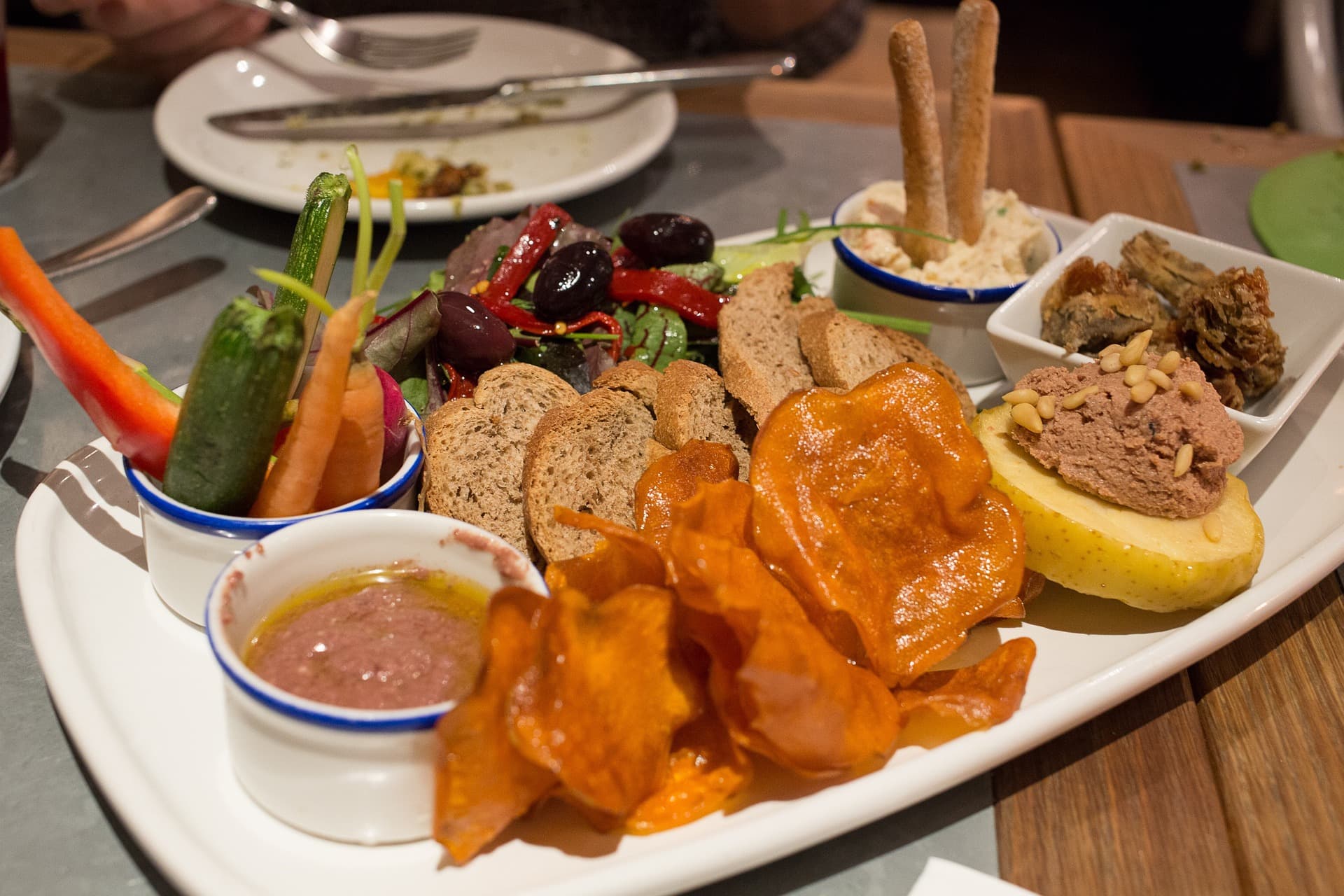
A traditional Spanish menu is meat-heavy. Cocido, fabada, txuleta, jamón, and perdiz are the pride of their tables. Vegetarians can still eat well, and they have to choose on purpose. Tortilla de patata or a tortilla francesa, escalivada in Catalonia, manchego or tetilla, salads, pan con tomate, pimientos de Padrón, gazpacho, and Seville’s spinach with chickpeas are real meals. Ask whether the tortilla hides tuna or ham. Ask for salmorejo without the jamón on top. Tell Spain 360 before the trip, not at the cider house, so we do not book a lunch that is only a chop. We can move a table. We cannot invent a vegetarian fabada and call it traditional.
Olive oil is the fat of the country. A plate of grilled vegetables is often dressed with raw oil after cooking. Salmorejo is built on it. If you dislike it or you are allergic, say so in the first email and again in the room. Nut allergies meet turrón, almond pastries, and some sauces. Shellfish sits in the fried-fish lunch and in many rice dishes. Write the allergy down: alergia a los frutos secos, alergia al marisco, alergia al gluten. Gluten is the honest difficulty. A tortilla may contain no bread and still share a fryer. We will not promise a sealed kitchen in a small bar. We will tell the kitchen, choose the simpler plate, and avoid pretending a shared fryer is a guarantee.
Wine by the glass, markets, and the first 48 hours
Order wine by the glass without ceremony. A caña is the small beer. A tinto de verano, wine with lemon soda, is the hot-afternoon drink in Andalusia. House red or white on a menú del día is a normal choice and is often inside the menu price. Confirm. Rioja and Ribera del Duero are the reds you will see on a Madrid or Castilian list. In Galicia ask for albariño. In the Basque Country ask for txakoli. In Catalonia, cava is the sparkling wine, and it is a glass, not only a celebration. In Jerez and Sanlúcar, start with fino or manzanilla, cold, before lunch. Leave the sweet styles alone unless you already know you want them.
Markets and restaurants do different jobs. Mercado Central in Valencia is a legitimate lunch if you are in the city and you eat at the counters rather than collecting snacks for a photograph. Mercado de Triana is the Seville morning. The Boqueria in Barcelona is crowded late; go early for fruit, and take a menú near the Gothic Quarter if you want a calm meal. Mercado de San Miguel in Madrid is a glass and a crowd. One stop is enough. Your education is the neighborhood bar in Huertas or La Latina, where the menú is written for people who work nearby. A market hall is not automatically more authentic because the ceiling is iron.
The format is the local knowledge. The dish is the choice you make inside it.
| City | How you order | The plate to choose on purpose |
|---|---|---|
| Madrid | You order and pay. No assumed free tapa. | Cocido at lunch on the day a house cooks it, or a pincho de tortilla at the bar. |
| Granada | A drink often brings a tapa. Still eat a real lunch. | Walk the bars. Do not skip lunch and call the taps dinner unless you meant to. |
| San Sebastián | Pay per pintxo. | A Gilda and txakoli at the counter, or a txuleta if you are sitting down for dinner. |
| Valencia | Paella is lunch, for the table, in the lunch hour. | Valenciana if you want chicken and rabbit. Seafood if you want seafood. All i pebre only if you want eel. |
| Seville and Córdoba | Bar plates, and a menú if it is midday. | Salmorejo. Fried fish on the coast. Gazpacho in summer, not as a January test. |
If you land in Madrid in the evening, eat near the hotel in Huertas or by Ópera: a pincho de tortilla and a caña, or a ración of jamón if you are awake enough to taste it. Do not order cocido at 11 p.m. The next morning, café con leche and tostada con tomate y aceite at a bar. At lunch, take the menú del día within walking distance of the Prado. Eat the first and the second. Leave the extra raciones for another day.
Dinner after nine can be the calamares sandwich around Plaza Mayor, a single ración at the bar if you are solo, or a shared plate if you are two. If day two is the AVE to Seville, eat lunch before Atocha or after Santa Justa. The train is not the meal. In Seville that night, order salmorejo, espinacas con garbanzos, and a cold fino. Skip gazpacho if the month is cold. If a freiduría by the river is open, fried fish replaces the soup.
"Lunch is the meal Spain cooks seriously. Order it in the local grammar, confirm the price on the board, and let dinner be late."— Spain 360, on the table
Use the board in front of the bar. In Madrid you order, and cocido is lunch. In Granada a drink often brings a tapa, which does not replace the menú at midday. In San Sebastián every pintxo has a price. In Valencia, paella is lunch, and all i pebre is eel. In Galicia, pulpo and albariño. In Asturias, fabada, then a quiet afternoon. In Extremadura, a plate of ibérico and a spoon of Torta del Casar. Bellota means acorns. Tell us about meat, olive oil, nuts, or shellfish before the trip. Today’s price is the one written outside.
Plan Your Spain Trip
Talk with our Spain-based team about small-group departures, private itineraries, and straightforward travel from the US—we handle the details.
Contact UsRecommended Journey
Heart of Spain & Rural Escapes
Fourteen days through smaller places, where lunch is a menú in a town, jamón is a plate from the dehesa, and dinner is late on purpose. The long route if the table matters as much as the monuments.
View the itineraryExpert's Tip
Eat the main meal at lunch, and order the local way: menú del día when you want a working meal, a drink that brings a tapa in Granada, a pintxo you pay for in San Sebastián. Confirm the price on the board.
Get the Soul of Spain in Your Inbox
Join our curated list for exclusive travel stories, hidden jazz venues, and expert guides delivered once a month.