Trains in Spain: A Practical AVE Guide
12 min read
Spain’s useful long-distance train is the AVE: a high-speed Renfe service with an assigned seat, a coach number, and a station name you have to read. Madrid to Seville’s Santa Justa is about two and a half hours. Madrid to Barcelona Sants is about two and a half hours. Madrid to Valencia’s Joaquín Sorolla station is about an hour and forty-five minutes. OUIGO and Iryo run some of the same corridors as private operators. They are still fast. They are often cheaper, and they are stricter about bags. None of this is a hop-on commuter system, and a rail pass is often a bad deal if you only ride two or three of these trains. Spain 360 will tell you, in the itinerary, when your day is a train and when a driver is the point.
The seat is assigned, and so is the station
An AVE ticket is for a specific departure, a specific car, and a specific seat. The platform screens show where that car is supposed to stop. You walk to the mark, you board, and you sit in your plaza. You do not roam the aisle looking for a mood, the way you might on a slow regional train with no reservation. Put the coach and the seat somewhere you can see without hunting email in the security line. The name on the ticket should match the passport you are carrying. A booking made in a friend’s name, or a misspelled surname the airline already knows how to mangle, is how people get stopped at the gate while the train leaves on time. If we book the train as part of your trip, we use the names you gave us. If you book it yourself, copy the passport, not the nickname.
Madrid has two stations that matter, and they are not neighbors. Puerta de Atocha sits at the south end, beside the old hall with the indoor garden and a short hop from hotels near the Prado. Chamartín sits in the north. A tunnel now links them, and some trains pass through one on the way to the other. That tunnel is not permission to guess. The train you want may leave from either station. Your ticket prints one of them. A taxi between Atocha and Chamartín in the late afternoon is a real ride across the city, not a ten-minute courtesy. Cercanías commuter trains also connect the two if you notice the mistake with time to spare. If your hotel is by the Prado or in the bars below Plaza Mayor, Atocha is the kind departure. If you are staying higher up, toward Chamberí or the northern edge of Salamanca, look at the ticket before you assume Atocha out of habit.
The station is not the monument
Seville’s Santa Justa is a proper modern station and it is not in the old town. Budget a taxi to a hotel in Santa Cruz, El Arenal, or near the cathedral. In ordinary traffic that is a short ride. In Semana Santa or Feria de Abril, when center streets close, it is a longer one, and two roller bags turn a walk into the worst half hour of the day. Córdoba’s station sits outside the Judería, on the far side of a walk you might enjoy with a daypack and will not enjoy in August with a suitcase. Take the taxi to the Mosque-Cathedral side and start the visit on your feet. The AVE from Seville to Córdoba is about forty-five minutes, which is why people try to add three other things afterward. The train saved you the highway. It did not save you the heat.
Toledo’s station is in the new town, below the rock the old city stands on. The fast trains from Madrid Atocha take about half an hour, which makes Toledo the right day trip back to the same hotel. What the half hour does not include is the climb. Escalators, a local bus, or a taxi finish the job. Do not plan to wheel a large suitcase up into a guesthouse with no elevator and call that arrival. Barcelona’s station for these trains is Sants, west of the Gothic Quarter. Metro lines run from the station, and a taxi to an Eixample hotel is straightforward if you have bags. Give yourself the same platform discipline you would at Atocha. Sants is large, and the security check for the high-speed trains is a separate step from wandering into the commuter concourse.
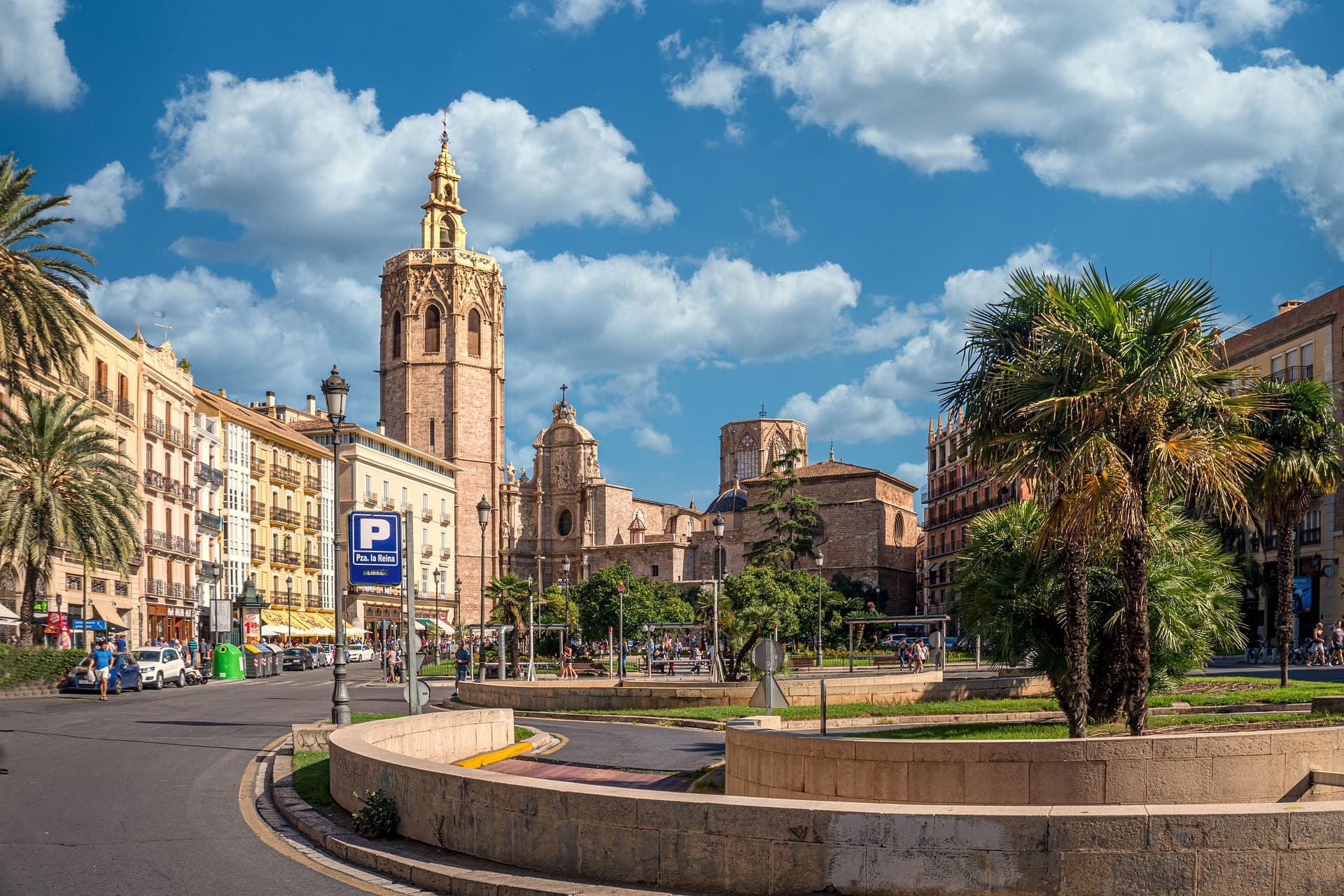
Valencia’s fast trains use Joaquín Sorolla, south of the old town, not Estació del Nord by the bullring. The ride from Madrid is about an hour and forty-five minutes, and then you still need a taxi or a local connection to a hotel in the Carmen or by the Turia gardens. A map pin that says ‘Valencia train station’ may mean Nord. Granada’s high-speed trains run via Antequera, a bit over three hours from Madrid, and the station is not the Alhambra gate or a back door to the Albaicín. Ronda, the white villages, and the Picos are Media Distancia, a bus, or a car.
Where to buy, and what the cheap fare is strict about
Buy from the operator. Renfe’s own site is the AVE. Iryo and OUIGO sell the private trains on the corridors they actually run. Renfe also has Avlo, its own lower-fare high-speed brand, on some of those same lines. A third-party seller will often add a markup and then become the only number you can call when something changes. Hold a Renfe, Iryo, or OUIGO booking. If a Spain 360 itinerary includes the ticket, we handle the ones we said we would handle. If you are on your own for a night before the tour, use the operator and keep the confirmation where your phone can open it offline. The lower fares sell first. A last-minute AVE can cost as much as a flight. Buying ahead is the whole trick, and it is a dull trick that works.
The trade on the cheap tickets is the bag and the change rule. A regular Renfe AVE is relatively generous: large suitcases go on the racks at the end of the car, and you keep them with you. There is no airline counter where the bag disappears. Those racks fill, and a huge hard case is still a misery at Toledo’s hill even when it is allowed. OUIGO’s cheapest fares are stricter. You often get a cabin-size bag and a small personal item, and extra bags are a paid add-on you buy before you reach the platform, not a negotiation with the conductor. Iryo sits between them depending on the fare you chose. Avlo is closer to the strict end. Confirm the current bag rule on the booking page for that departure.
Security, the platform, and how early is early
Some AVE departures run you through a security check before the platform. Arrive early enough for that. Twenty to thirty minutes is the right picture. Two hours is an airport habit, and it wastes a morning you could have spent at breakfast. Four minutes is how you watch your train leave from the wrong side of the scanner. If you are changing from a Cercanías commuter train onto an AVE at Atocha, the security check is a separate queue. Do not treat the commuter arrival as if you were already at the AVE door. Have the QR code and your passport in a pocket, not under a laptop at the bottom of a backpack you must unpack while the line behind you sighs. Children need their own tickets and their own passports. They are not a line on yours.
Cercanías are the commuter trains: Madrid, Barcelona, Valencia, Seville, Málaga, and others. They are how you get from Madrid’s airport toward Atocha if you are not taking a taxi, and how you hop to a suburb. Confirm the current airport line on the day, because numbers get revised, and do not budget an AVE connection so tight that a late commuter train eats the security buffer. Talgo and Media Distancia services are the slower trains to cities the AVE never really reaches, or reaches only by a connection that is the real journey. They are the right tool for a smaller city and the wrong tool if you thought you had bought two and a half hours to Seville. Check the word on the ticket. AVE, Avlo, Iryo, and OUIGO are the fast ones. Anything else needs you to read the duration twice.
Times are typical high-speed runs, not a promise about your exact departure. Confirm current.
| Pair | Rough ride | What people forget |
|---|---|---|
| Madrid–Seville Santa Justa | about 2.5 hours | Santa Justa is outside the old town. Taxi in. |
| Madrid–Barcelona Sants | about 2.5 hours | Confirm Atocha or Chamartín before you leave the hotel. |
| Madrid–Valencia Joaquín Sorolla | about 1 hour 45 | Sorolla is not Estació del Nord. |
| Madrid–Toledo | about 30 minutes | The station is below the hill. The old town is a second ride or a climb. |
| Seville–Córdoba | about 45 minutes | Córdoba’s station is outside the Judería. |
| Madrid–Málaga María Zambrano | a bit under 3 hours | A clean finish to Andalusia. Not a side trip from a Seville lunch. |
When a driver beats the train
The train is a straight line between two stations. The moment you want a third place, the driver usually wins. A morning at Córdoba’s Mezquita, a stop in Carmona or a white village, and Seville by late afternoon is a driver’s day. The AVE from Córdoba to Santa Justa is about forty-five minutes and it skips Carmona on purpose. Rioja is the same shape. Haro’s bodegas, Laguardia’s walls, and lunch in a village between them are not a train problem, and they must not be your driving problem either if anyone is tasting. Ronda from Seville, with Zahara de la Sierra or Grazalema along the way, is a road day. The kilometer count flatters you. The sierra does not. A family with a pile of luggage and a rural hotel outside Cangas de Onís or Llanes is also a car day. There is no useful train to the Lagos de Covadonga. A car seat reserved with a driver is simpler than hoping a station taxi has one.
Three famous cities before dinner is the request we refuse even when each pair has a train. Madrid, Toledo, and Seville can be made to look possible on a timetable if you ignore walking, security, taxis, and the fact that Toledo is a hill. It is a bad day. You see a station, a gate, and a tired child. We would rather you sleep in Madrid, take the half-hour train to Toledo, come back to the same hotel, and ride to Seville the next morning in a seat with your name on it. The driver earns the day when the stops are the trip. The train earns the day when the cities are the trip and the highway in between is just Despeñaperros, which is a fine pass and a wasted morning if you had no plan to get out of the car.
When the train beats the driver
Madrid to Seville, straight, is the train’s best argument. About two and a half hours, a seat, a bathroom, no truck to pass on the A-4. You arrive at Santa Justa able to walk to lunch instead of peeled off a highway. A driver meeting you at Santa Justa, or a taxi to the hotel, finishes a better day than six hours of autovía so that someone can say you ‘drove Andalusia.’ Madrid to Barcelona is the same logic. You want the Gothic Quarter or the Eixample in the afternoon, not a service area outside Lleida. Madrid to Valencia in about an hour and forty-five minutes can put you in the Turia gardens the same day, if the rest of the day is actually free. We do not bolt Valencia onto a Seville week just because both cities have trains.
A rail pass is often the wrong purchase if you are riding two or three long trains and nothing else. High-speed trains in Spain generally need a seat reservation on top of the pass, those reservations cost money, and they sell out on the trains you actually want. An AVE bought ahead, at the lower fare, frequently beats the pass arithmetic once you add the fees and the inflexibility. A pass can make more sense on a slow multi-week trip full of regional trains. Even then, check the reservation rules before you fall in love with the map. Most Spain 360 guests doing Madrid, Seville, and Barcelona are better with the two or three tickets the route needs. If your itinerary is a pass trip, we will say so. If it is not, do not buy one to feel prepared.
Missed trains, late flights, and how a tour uses the rails
If you miss the train, the next AVE is not included. A flexible fare may let you change, sometimes with a fare difference. A cheap promotional fare may be gone. OUIGO and Iryo are different companies from Renfe. A Renfe employee cannot simply place you on the other operator’s departure because you are standing in the same station looking sad. Go to the app or the counter for the company that sold you the seat, and do it immediately, not after a long coffee. This is also why we hate a tight connection out of a transatlantic flight. Barajas to Atocha is a taxi or a Cercanías ride that can take the better part of an hour, more when the M-30 is sulking, and then security wants its twenty or thirty minutes. Landing at 11 and holding an AVE at 12:30 is a wish. Go to the hotel and take a morning train you can catch. On a small-group date, arrive in Spain the day before.
- Open the ticket the night before and read the station, the car, and the seat out loud.
- Be at AVE security about twenty to thirty minutes early, not two hours and not five minutes.
- Keep the passport with the phone. The name on both should match.
- On OUIGO, Avlo, or a strict Iryo fare, pay for the extra bag before you leave the hotel.
- From Santa Justa, Córdoba, Toledo, Sorolla, or Sants, plan the taxi or metro before you celebrate the short ride.
- If the day includes a village, a bodega, or three stops, ask for a driver. The AVE will not improvise.
"Buy the lower AVE fare ahead. The last-minute seat can cost as much as a flight, and it is still only a seat."— Spain 360 trip notes
On our tours the itinerary tells you if a day uses trains. Grand Spanish Highlights runs from Madrid through Seville, Córdoba, and Granada and can reach Barcelona. Some of those links are ridiculous to drive if nobody needs a stop in between, and some are ridiculous to train if the white villages or the Alhambra’s timing is the point. We choose, and we write it down, including which station the morning starts from. You should not be in a taxi arguing about Atocha. Private trips stay with a driver when the stops are villages. A small-group coach day is a third thing, and the PDF will not pretend it is an AVE. If you join midway, we name the station and the time.
Use the train for the long straight rides: Madrid–Seville, Madrid–Barcelona, Madrid–Valencia, the half hour to Toledo and back to the same bed. Use a driver when the day has a village, a gorge, a bodega, or a pile of family luggage and a hotel with stairs. Buy from Renfe, Iryo, or OUIGO. Read Atocha or Chamartín before you roll the suitcase to the door. Give security half an hour, not an afternoon. And if you only have two or three of these rides in the whole trip, skip the rail pass and buy the seats.
Plan Your Spain Trip
Talk with our Spain-based team about small-group departures, private itineraries, and straightforward travel from the US—we handle the details.
Contact UsRecommended Journey
Grand Spanish Highlights
Ten private days from Madrid through Seville, Córdoba, and Granada toward Barcelona. The plan says which morning is an AVE and which morning is a driver, so you are not guessing at Atocha.
View the itineraryExpert's Tip
Read the station name on the ticket before you tell the taxi driver 'the train station.' In Madrid that sentence can send you to the wrong end of the city.
Get the Soul of Spain in Your Inbox
Join our curated list for exclusive travel stories, hidden jazz venues, and expert guides delivered once a month.