
Spain Travel for US Citizens in 2026
12 min read
If you are a US citizen planning a first trip to Spain, the legal part is the easy part. Ordinary tourism is legal and routine. You do not need a Spanish tourist visa for a short stay, you do not file an arrival form 72 hours before the flight, and you do not need a special US government license to walk into the Prado or sit down for lunch in Seville. What you do need is a passport that will still be valid after you fly home, a realistic sense of the 90-day Schengen clock, and a plan that matches how Spain actually eats, sleeps, and sells museum tickets. This is the briefing we give Spain 360 guests in 2026. It is not legal advice. Entry rules can change, and we will tell you if they do before you travel.
What you actually need before you fly
Spain typically wants your passport valid for at least three months after the day you plan to leave the Schengen Area. Some airlines still ask for six months of validity when they check you in, even when the border itself would have let you through. Check the expiration date against your return, not against the day you land. Bring a passport with a blank page. A passport card is not enough for international air travel. If the book is already full of stamps, renew it. This is the single most common reason a carefully planned Spain trip falls apart at a US airport, and it is completely avoidable if you look at the date now.
US citizens traveling for tourism currently enter Spain visa-free for a short stay: up to 90 days in any 180-day period inside the Schengen Area. That clock is shared with France, Italy, Portugal, Germany, and the rest of the zone, not reset when you cross from Spain into Portugal for a weekend. You do not buy a Spanish tourist visa for this kind of trip, and there is no extra Spanish arrival form to complete before you fly. Have your first hotel address and your return ticket handy at passport control. That is usually the whole conversation.
ETIAS is not something you can apply for yet
ETIAS, the EU’s planned travel authorization for visa-free visitors, is not in operation as of October 2026. You cannot apply yet, and anyone selling you an “ETIAS appointment” today is not selling the real system. Officials have said they will announce a start date months in advance. If it opens before your trip, the application is meant to be a short online form with a small fee, not a visa interview. We will tell booked guests how to apply if that date arrives before they fly. Until then, do not pay a third-party website to “pre-register” you.
A separate change you may actually meet at the airport is the EU Entry/Exit System. Some European airports now take a fingerprint or a face scan the first time you enter, then match you on the way out. It is not a form you fill in at home. Build a little time into a tight connection, especially if several flights are landing at once, and keep your passport out of the suitcase. Children travel on their own passports. A parent’s passport that still lists a child is not a travel document for that child.



Where US flights actually land
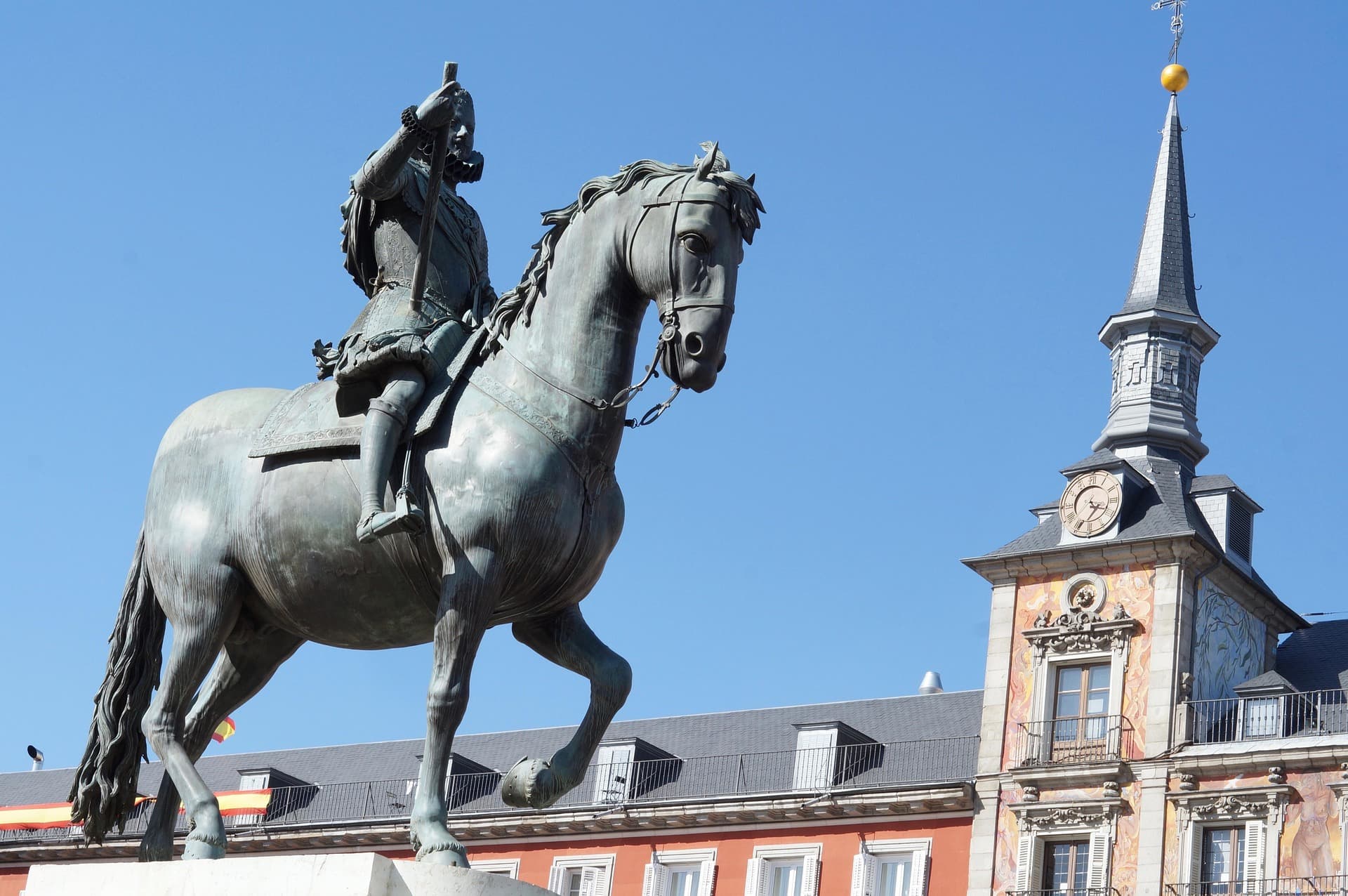
Most Spain 360 itineraries start in Madrid. Barajas (MAD) has nonstop and one-stop service from New York, Miami, Dallas, and other US hubs, plus a full set of European connections. Some routes start in Barcelona (BCN). Your itinerary PDF names the airport. Do not assume you can land in Málaga or Seville just because the tour spends time in Andalusia. Southern airports are useful when the trip is built that way. They are a poor surprise if the guide is waiting in Madrid.
Flights are not included in our tours. You book the international ticket. Airport transfers are included when they are part of your quote: we meet you on arrival and take you back for departure. If you are arriving on your own a day early, tell us the flight number anyway. A delayed transatlantic arrival is easier to absorb on a private tour than on a small-group departure that already has a fixed first-day plan. For small-group trips, we publish the date you need to be on the ground. Land the day before if the only sensible flight gets in after dinner.
Pick the airport that matches the first hotel, not the city you like best on a map.
| Airport | Best used for | Watch-out |
|---|---|---|
| Madrid (MAD) | Most first trips, Castile, Andalusia by train or road | Terminal changes can be slow. Do not book a 50-minute connection you have never made. |
| Barcelona (BCN) | Catalonia, the coast, a north-to-south routing | The city is not “on the way” to Seville. Treat it as its own block of days. |
| Málaga (AGP) | Andalusia-only trips, Costa del Sol, a Seville finish | A useful end airport. A weak start if day one is the Prado. |
| Bilbao (BIO) or Santiago (SCQ) | North-only trips: Basque Country, Picos, Galicia | Do not bolt these onto a seven-day Andalusia week. |
Money, cards, and the euro
Spain uses the euro. Visa and Mastercard from US banks work in almost every restaurant, shop, hotel, and museum. Contactless cards and Apple Pay or Google Pay are normal in cities. Carry a small amount of cash for a market stall, a tiny bar that has not bothered with a terminal, or a tip you want to leave on the table. Use a bank ATM after you land rather than the airport exchange booth with the bright rate in the window. Tell your bank you are traveling so a Madrid restaurant does not look like fraud at 10 p.m.
Dynamic currency conversion is the quiet way to overpay. If a card machine asks whether to charge you in dollars or euros, choose euros. Your own bank’s rate is almost always better than the merchant’s “courtesy” conversion. The same applies to some ATMs that offer to debit your account in dollars. Decline the conversion, take the euros, and let your bank do the exchange. Keep one backup card in a different place from the card you tap all day. A single lost wallet should not end the trip.
Insurance, health, and what Spain does not ask for
Spain does not require a special national medical-insurance product to enter the way some countries do. We still recommend a travel policy that covers medical care, evacuation, and trip interruption, because a hospital bill or a missed connection is a travel problem, not an immigration problem. It is not required to book a Spain 360 tour. If you want help reading what a US airline ticket or a credit-card policy already includes, ask us before you buy a second policy that duplicates the first.
Tap water in Spanish cities is safe to drink unless a sign says otherwise. Pharmacies (the green cross) are the right first stop for a stomach, a blister, or a sunburn, and the pharmacist will tell you if you actually need a doctor. For anything serious, your hotel and your guide know the nearest clinic. Bring enough of any prescription medication for the whole trip in the original packaging, plus a few extra days in case a flight slips. A letter from your doctor matters more for a controlled medication than for ordinary blood-pressure pills, but do not pack the only supply in checked luggage.
Plugs, phones, and the hours Spain keeps
Spain uses 230 volts and Type C or Type F plugs, the two round pins common across continental Europe. Most phone and camera chargers are dual-voltage and only need a compact adapter. Hair dryers and flat irons often are not. Read the little plate on the device before you assume the hotel kettle is the problem. We send a current note on eSIMs and roaming as dates get closer if you want data the moment you land. Offline maps of Madrid, Seville, and your driving day are worth downloading anyway, because a garage or a gorge does not owe you a signal.
The clock will feel late if you arrive from the US East Coast and expect dinner at 6. Lunch is the long meal, often from about 2 to 4. Dinner in a city restaurant starts in earnest after 8:30 or 9, later on a summer weekend. Kitchens that advertise an early “tourist menu” exist, and some are fine, but the table you actually want is usually the later one. On a tour we schedule this for you. On a free evening, do not panic at 7 p.m. when the room is empty. Have a glass of wine, walk, and sit down when the room fills.
"Land the day before a small-group departure if the only good flight gets in after dinner. The first morning in Spain should not be a sprint from baggage claim."— Spain 360 trip notes
How a guided trip fits the rules
You do not need extra US paperwork to join a tour in Spain. Our trips are guided because that is how we work: a local plan, reserved tickets, hotels we know, and a pace that matches the country. They are not built to satisfy a license that demands a full-time cultural schedule. Read the US travelers page on this site if you want the longer version, and keep your itinerary somewhere you can open it without hunting through email at a hotel desk.
What we handle once you are booked is the part that actually makes the week work. Alhambra and Sagrada Família tickets are named and timed. Trains worth taking sell the cheap seats first. Old towns in Toledo, Seville, and Córdoba are easier with a driver who already knows where the coach park ends and the walking begins. Closer to departure we send the first hotel address, a reminder on passports, and an ETIAS note only if the system has actually launched. You still book your own international flights unless we have agreed otherwise in writing.
A sensible first shape, not a highlight reel
Seven days is enough for Andalusia done properly: Madrid in and out, or Málaga in and out, with Seville, Córdoba, Granada, and one white town. It is not enough for Andalusia plus Barcelona plus San Sebastián. Ten days can add Toledo and a slower Granada, or trade the south for the north if the Picos and Santiago are the point. Fourteen and twenty-one days are where Spain stops feeling like a transfer between monuments. The Grand Spanish Highlights private trip is the ten-day version of the classic loop. The Grand Tour of Spain small-group departure is the three-week version, with a cap of twelve guests and fixed dates.
August in inland Andalusia and Madrid is a furnace. Semana Santa and Seville’s April Fair fill hotels on purpose. If you want the festival, book it as the reason for the trip. If you want the Mezquita without a procession in front of the door, pick another week. None of that is a visa issue. It is the difference between a trip you remember and a trip you spent in a taxi.
If a detail in this briefing does not match what an airline website said last Tuesday, ask us before you pay a third party to “fix” it. The stable facts for a US traveler in 2026 are simple: a valid passport, a short stay inside 90 days, no ETIAS application yet, euros on a card that works, and an itinerary that respects distance. We will take the monuments, the tables, and the driving from there.
Plan Your Spain Trip
Talk with our Spain-based team about small-group departures, private itineraries, and straightforward travel from the US—we handle the details.
Contact UsRecommended Journey
Grand Spanish Highlights
Ten private days from Madrid through Toledo, Andalusia, Valencia, and Barcelona—the classic first Spain loop, with tickets and a driver handled.
View the itineraryExpert's Tip
If your passport expires within three months of the day you plan to leave Europe, renew it before you buy the ticket. Airlines are stricter than the postcard version of the rule.


Get the Soul of Spain in Your Inbox
Join our curated list for exclusive travel stories, hidden jazz venues, and expert guides delivered once a month.