San Sebastián, Bilbao, and the Basque Country
12 min read
San Sebastián and Bilbao are an hour apart and a bad idea on the same day. Donostia — you will see both names, and locals use Donostia — is a bay, a beach promenade, and an old quarter built for standing at a counter with a small plate. Bilbao is a river city with a museum that changed the map, and an older town that was there long before the titanium. The drive or the bus on the AP-8 takes about an hour when traffic is kind. That hour is not the problem. The problem is pretending either place is a suburb of the other. Spain 360, 360 Travel S.L. in Zaragoza, gives each a night on a private north-Spain trip, then moves on to the coast and the Picos. Flights are not included. Hotels are three to five stars, named closer to the date. September is the month we would pick if you asked us which one to circle.
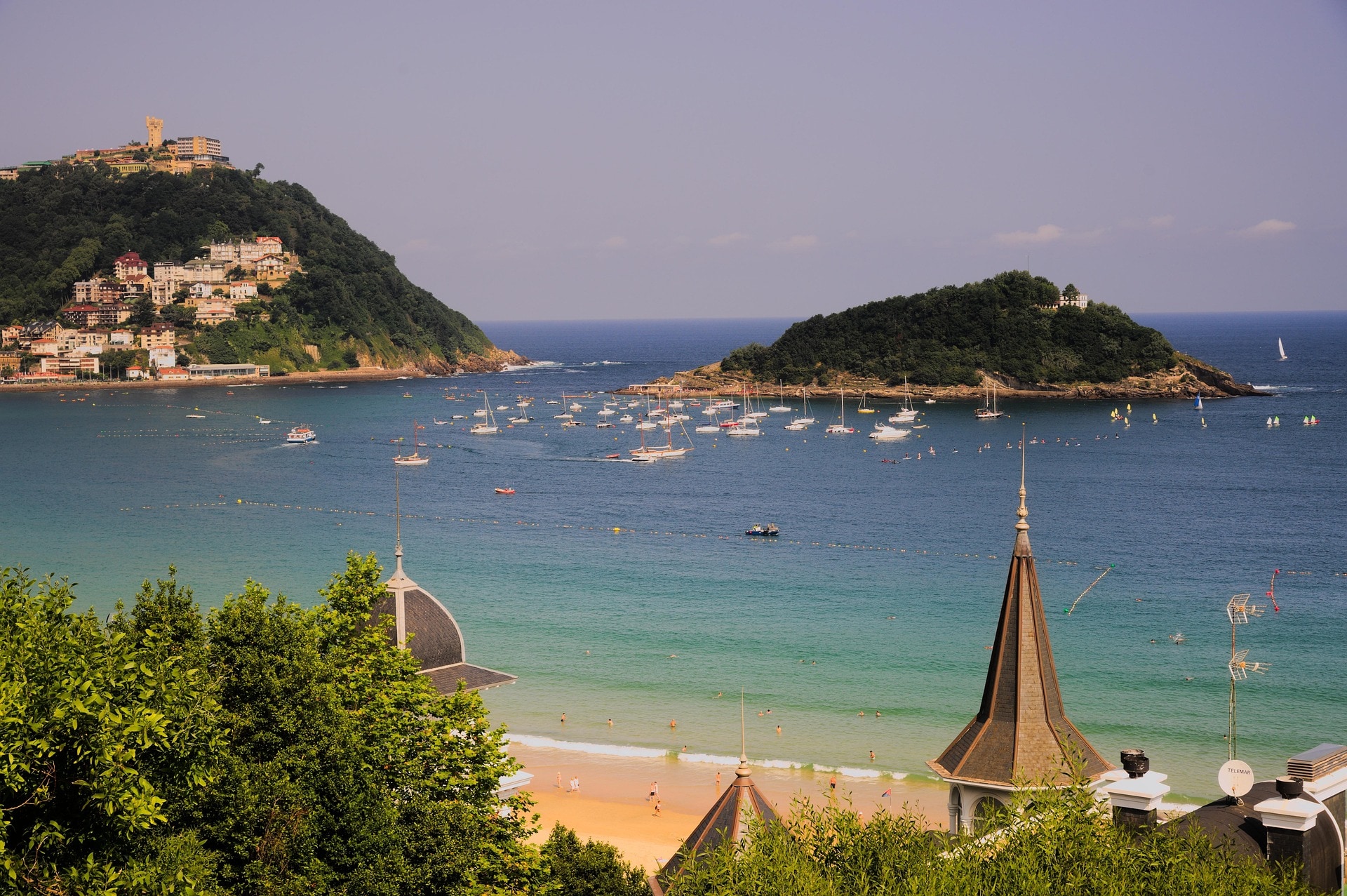
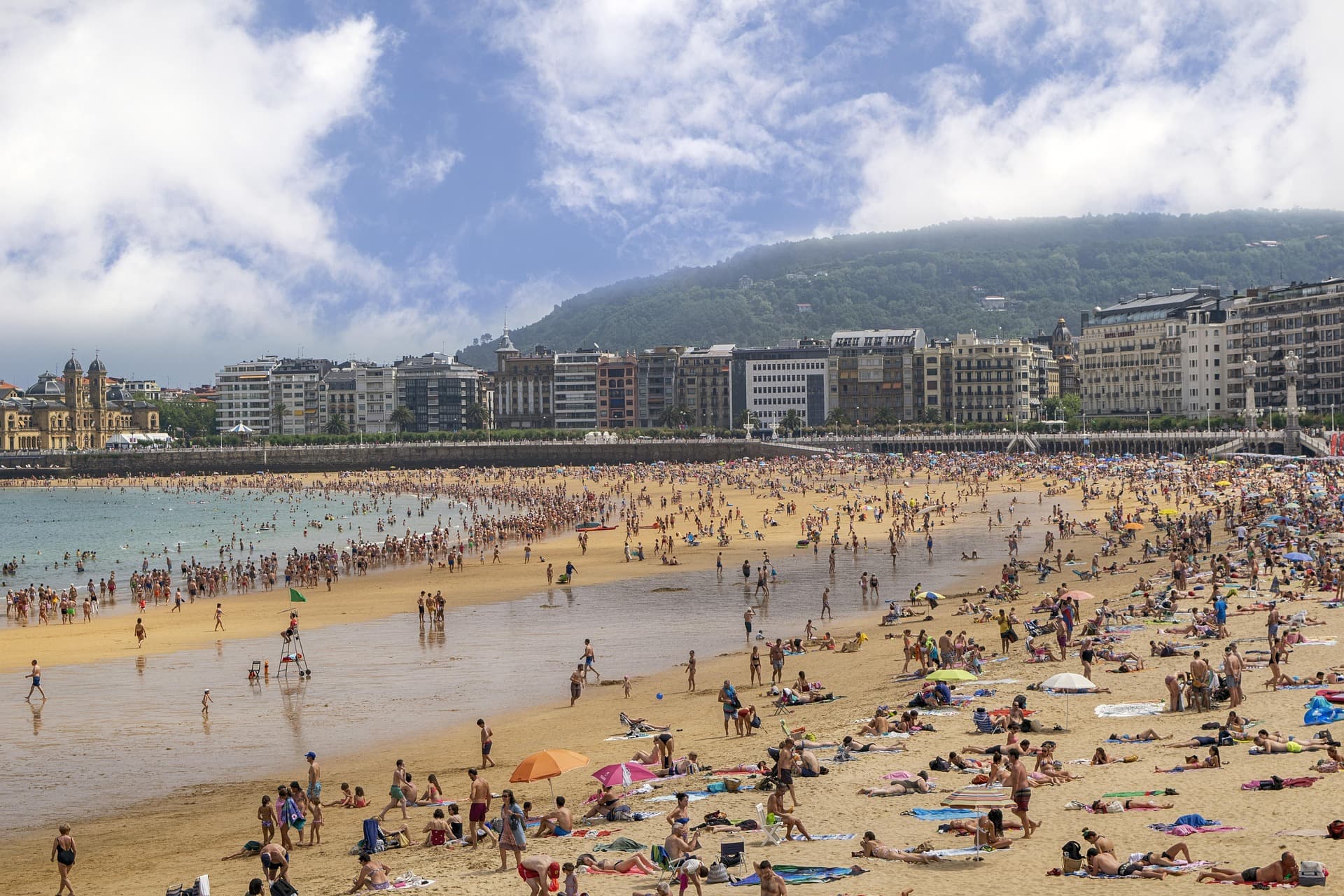
La Concha is a walk, and a swim in season
La Concha is the curve of sand and railing that organizes San Sebastián. In summer, swim. The water is the Bay of Biscay, which means it can be colder than the postcard suggests, and it is still the right use of a clear afternoon. Out of season, walk the promenade from the old town toward the west end, where the funicular goes up Monte Igueldo. The island of Santa Clara sits in the bay; a small boat runs out in season if you want the view back at the city, and it is an option, not the skeleton of the day. The promenade works in a light rain. A full storm is a different plan: the aquarium at the end of the port if you have children and a wet hour, or a long lunch, or the drive to Bilbao for the museum.
Gros, across the Urumea, is the other beach city. Zurriola is the surf beach, steeper and less postcard than La Concha, and the neighborhood behind it is where you stay if you want a local morning and fewer souvenir windows. The pintxo bars around Calle Zabaleta are a second scene, useful on night two when the Parte Vieja already happened. Stay in the center or near the old town if the evening walk to the bay is the point. Stay in Gros if the first thing you want in the morning is the sound of the beach. Both are right. A resort tower down the coast, chosen because it had a car park, is how you spend dinner in a taxi.
Pintxos: stand, order one or two, move
The Parte Vieja is the old quarter on the harbor side of the bay, and the streets that matter for eating are short: 31 de Agosto, Fermín Calbetón, Mayor, and the lanes that join them. A pintxo is a small plate, often a slice of bread with something precise on it. The gilda — olive, anchovy, pickled pepper — is the old standard, and you should eat one even if you then move on to a grilled prawn or a slice of tortilla. Order one or two things and a drink. Txakoli, the local white, is poured from height so it breaks in the glass. A zurito is a small beer. Stand at the counter. Then go to another bar.
Do not sit down at the first pleasant place and order twelve pintxos. You will be full of bread by the fourth, you will have seen one counter, and the old town will have happened without you. The method is the walk. Some bars are famous for one thing — a specific tart, a prawn, a skewer — and the pleasure is eating that thing there and leaving. If a group of you wants a table and a conversation, do that at dinner, at one booked restaurant, on a different night from the serious crawl. Lunch hours still apply in the seated rooms: the long meal is about 2 to 4. The bars in the Parte Vieja run later and looser, which is why they are the evening plan. A tasting menu the same night as a twelve-bar walk is how you stop being able to taste. One serious meal for the whole stay is enough. We will not recite star counts. The city has famous kitchens. The fact that matters is the reservation, made ahead, for one evening.
One hill, not two
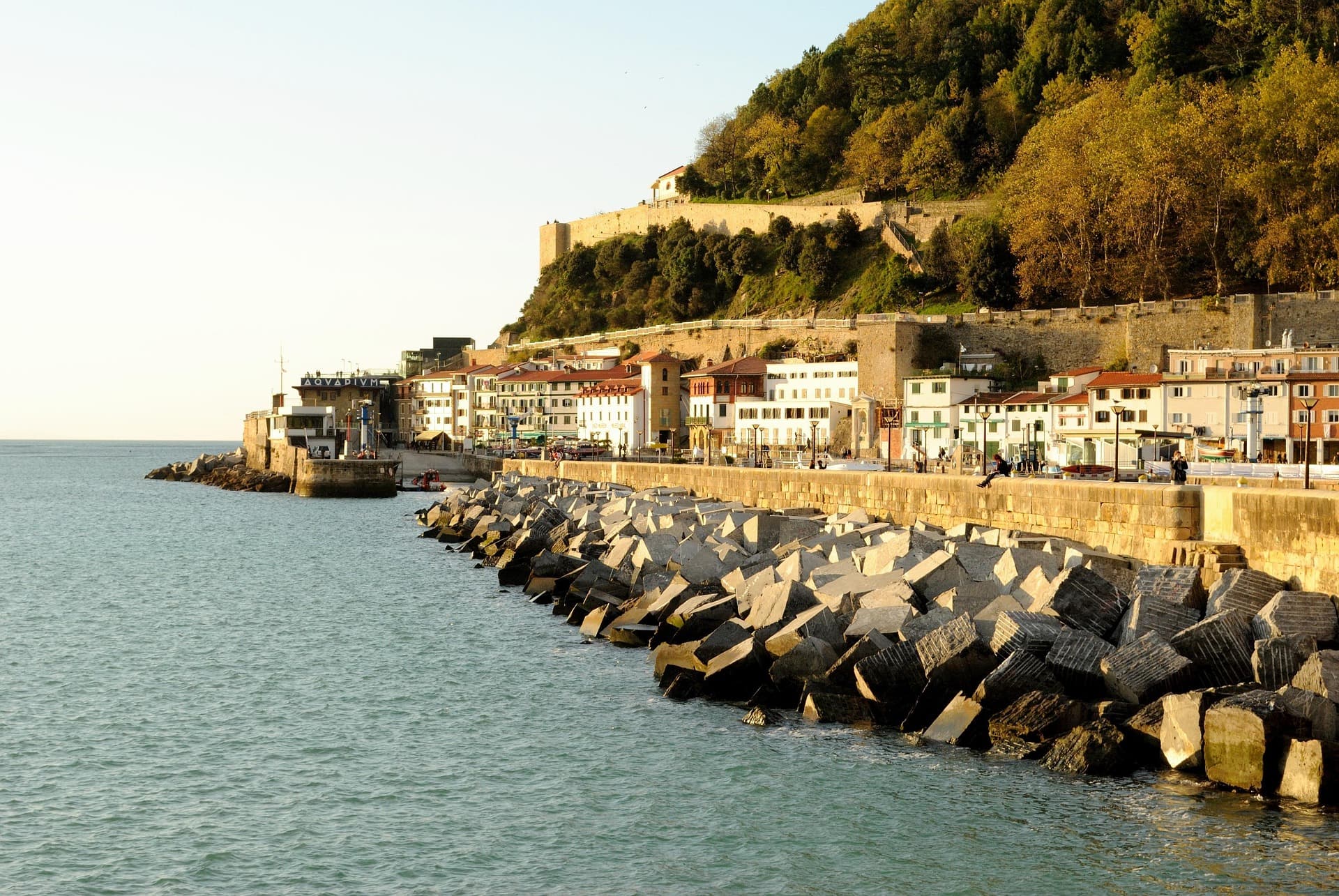
Monte Igueldo is the funicular at the west end of La Concha. The view back along the bay is the photograph, and there is an old-fashioned amusement park at the top that you can ignore or enjoy depending on your tolerance for a slightly faded pleasure garden. It is a ticket and a short ride, and it is the right hill if the wide curve of water is what you want. Monte Urgull is the wooded headland above the Parte Vieja. You walk up, there is a castle and the statue of the Sacred Heart, and the view takes in the bay on one side and the port on the other. It is free, steeper, and closer. Pick one. Doing both, plus a tasting menu, plus a beach swim, is how a pleasant day becomes a march.
Urgull is the better choice if the weather is unstable and you want to be able to retreat downhill into a bar in ten minutes. Igueldo is the better choice on a clear late afternoon when you can stand still. Neither replaces a walk on the sand. If someone in the group cannot face a climb, take the funicular and let Urgull go. The city does not require a summit to make sense. It requires you to be on the promenade at least once without a deadline.
Bilbao is not a suburb
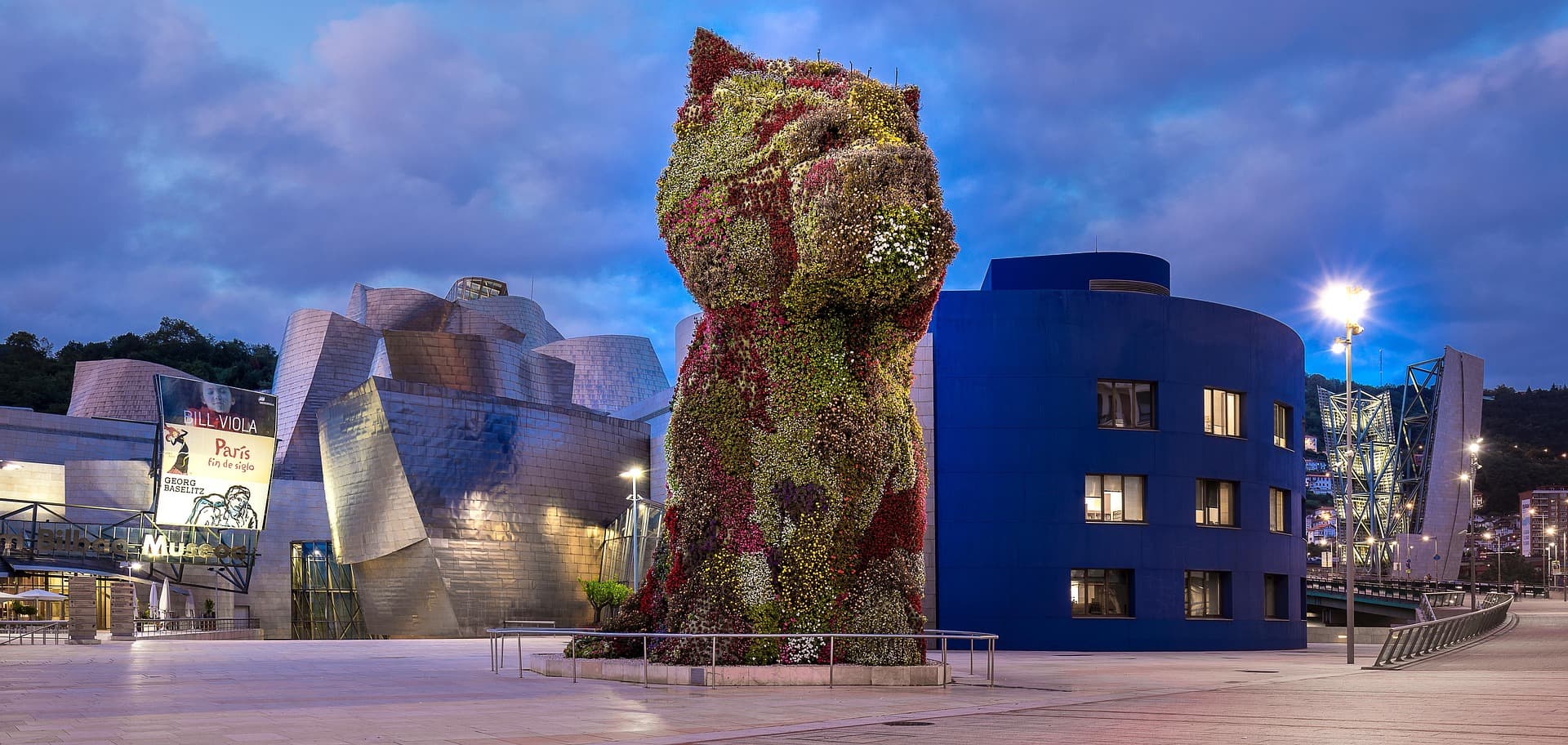
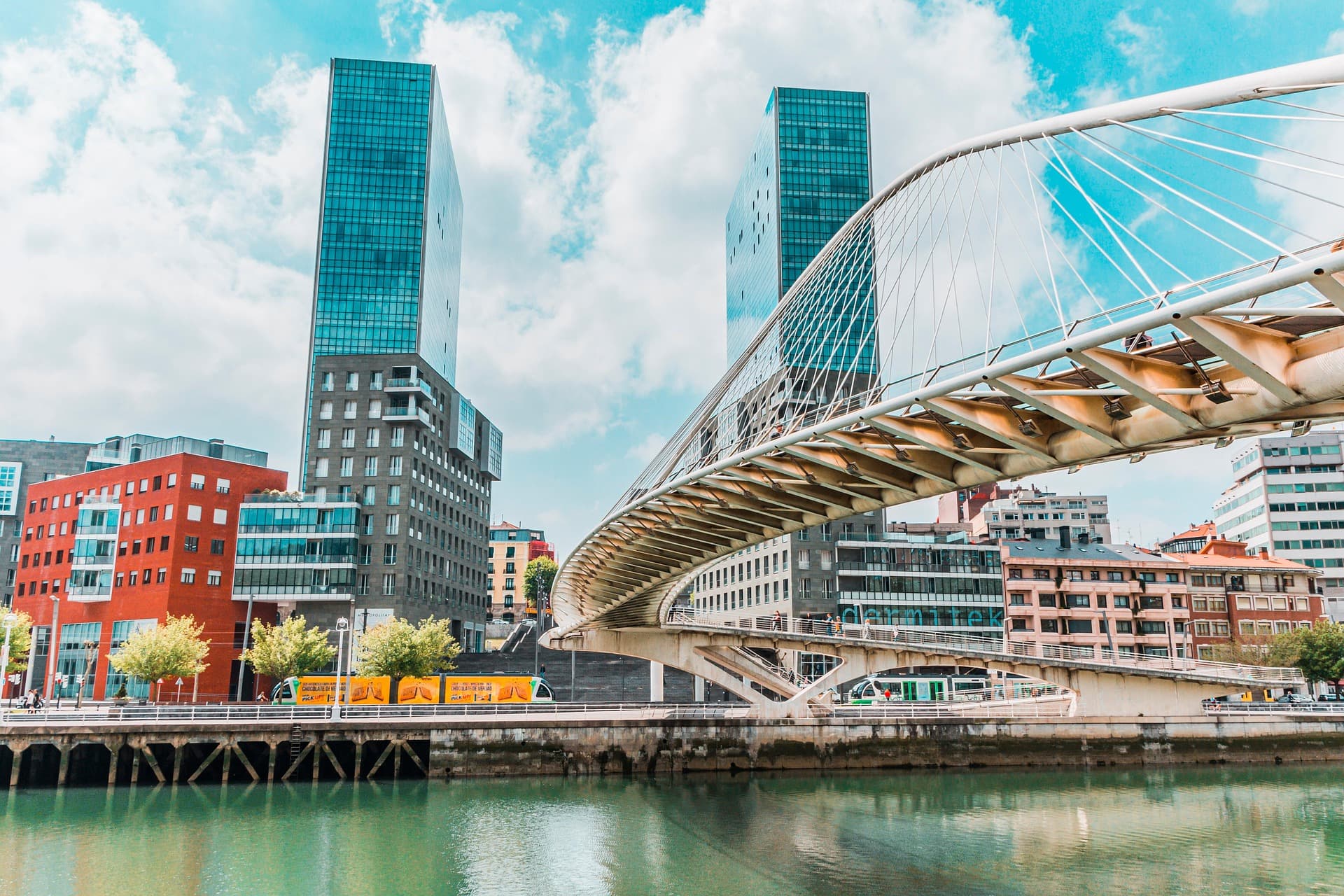
Bilbao wants a timed plan at the Guggenheim and a separate hour in the Casco Viejo, and it wants a bed afterward. The museum building is the point even when the exhibition has changed since the last article you read. Frank Gehry's titanium ship on the Nervión is the visit: the atrium, the river side, the curves you cannot understand from a postcard. Puppy, the flower dog at the entrance, and Maman, the spider, are outside and will be there whether or not you go in. Go in. Book a time. A drive-by from the opposite bank is a photograph, and you could have taken it from the bus window on the way to San Sebastián. Exhibitions rotate. We will not promise a specific show. We will promise that the building is worth the hour you give it.
The Casco Viejo, the Siete Calles, is the older Bilbao. Plaza Nueva is the square for a pintxos round that feels different from Donostia: more of a plaza, more of a place you might sit, still better if you move after a plate or two. The Ribera market is the morning if you want to see what the city cooks. The river walk from the Guggenheim toward Santiago Calatrava's Zubizuri footbridge and on to the Casco is the right way to connect the two halves when the weather holds. It is a real walk, not a five-minute stroll. If the rain is serious, take a taxi and do not turn the promenade into a moral test. One night in Bilbao covers the museum and the old town if you are disciplined. It does not cover them plus San Sebastián plus Getaria. Two nights in San Sebastián and one in Bilbao is the minimum we like when both cities are the reason for the trip. Zero nights, and a 'stop on the way to the Picos,' is how you miss both.
- La Concha in the afternoon: a walk, and a swim if the month allows it.
- Parte Vieja at the counter, then a second night in Gros if you are staying longer.
- Guggenheim on a timed ticket, then the Casco Viejo or the river, not a third city.
- Getaria at lunch, seated, for grilled fish, on the day you move between the two.
- Pamplona and San Fermín left in Pamplona, in the first half of July, not imported to this bay.
The bus or the drive between San Sebastián and Bilbao is about an hour. Each city still wants a night.
| Place | Give it | A waste of the same hour |
|---|---|---|
| Parte Vieja | An evening of two or three bars | A seated twelve-pintxo tasting at the first one |
| La Concha or Zurriola | A real walk or a swim | Five minutes on the sand between museums |
| Igueldo or Urgull | One viewpoint | Both hills plus a tasting menu |
| Guggenheim | A timed entry inside the building | A photo from the bridge and a claim you 'did Bilbao' |
| Getaria | A seated grilled-fish lunch | A harbor photo on the way to the motorway |
Getaria, between them, for the grill
Getaria sits on the coast between San Sebastián and Bilbao, closer to Donostia, just off the main road and easy to miss if you are watching the clock. The harbor grills whole fish — a rodaballo or a besugo over the iron — and the lunch is the reason to stop. Sit down. A twenty-minute photo of the port wastes the town. El Ratón, the mouse-shaped island, is the outline in the water you will recognize once someone points. Juan Sebastián Elcano sailed from here; the small museum is worth it if the circumnavigation is a story you actually want, and skippable if it is not. The Balenciaga museum, in a modern building above the town, is the right hour if clothes and cut are part of how you travel. It is the wrong hour if the group is hungry and the grill is open.
Use Getaria as the day between the two cities: late morning out of San Sebastián, lunch by the harbor, Bilbao in the afternoon for the museum or the evening for the Casco. Or the reverse, if the Guggenheim time you could get is the morning. Do not use it as a third night unless you specifically want a fishing-town morning and are willing to give up a night in one of the cities. The grills follow Spanish lunch hours. Arrive to sit down around 2, not at noon expecting a full room, and not at 5 expecting the kitchen to be in the mood. Txakoli from this stretch of coast is the glass. You are a passenger afterward if the afternoon includes anything more than a short walk.
"San Fermín is Pamplona in the first half of July. San Sebastián's own big week is mid-August, over the bay, with fireworks. They are not the same party."— Spain 360, on the Basque calendar
Rain, September, and the festival people mix up
It rains here. The green hills behind the bay are green for that reason. A clear day on La Concha in September is a gift you should use, not a standard you should demand in the booking. Pack a jacket that sheds water, including in July. A light rain on the promenade is still a good walk. A storm day is the Guggenheim, or a long Getaria lunch, or the pintxo bars, which were invented by a climate that does not care about your beach plans. September is the sweet spot we actually recommend: the sea is still swimmable for a lot of people, Zurriola still has surfers, August's crush has eased, and the txakoli harvest is beginning in the hills behind Getaria and Zarautz. June can be lovely and a little cool. August is beautiful and full, and the hotels know it.
San Fermín is Pamplona, not San Sebastián. The festival runs through the first half of July, from the 6th to the 14th, and the morning encierro is the part people mean when they say the running of the bulls. Pamplona is inland, about an hour or a bit more from Donostia, and it is a specific logistics problem: rooms, crowds, a city that is doing a fiesta and not a food walk. If you want it, go to Pamplona for it. Do not book 'the Basque party week' and land in San Sebastián expecting bulls in the Parte Vieja. San Sebastián's own Semana Grande, Aste Nagusia, usually sits around the 15th of August: fireworks over the bay, a full town, book it if the fireworks are the point and avoid it if you wanted the old quarter to yourself. They are different weeks in different cities.
France, driving, and where this sits in a longer trip
Hendaye, Saint-Jean-de-Luz, and Biarritz are close. The border is a short train or a short drive, and a French pastry is a pleasant hour. On a three-day Basque stay it is the wrong hour. You will have spent the afternoon you could have used in Getaria or in Bilbao's Casco Viejo on a border hop that a longer trip can absorb and a short one cannot. Hondarribia, on the Spanish side of the estuary, is the version we would allow: a walled old town, a walk, and back. If the trip is a week and someone has a real reason for Biarritz, say so and we will put it in. If the trip is a long weekend, stay in Spain.
Do not drive into the Parte Vieja or into the Casco Viejo. Park in a garage and walk. Old towns and rental cars fight each other here as they do everywhere the lanes were built for a handcart. Right-hand traffic on the AP-8, and if the stretch you are on is tolled, pay it and keep the hour you saved for lunch. An International Driving Permit is a cheap backup beside a US license if you are renting. On our private trips the driver is ours, which is the right arrangement on a txakoli day. You still book your own flights. Bilbao airport is the practical international door. San Sebastián's airport is small and should not be the assumption on a transatlantic ticket. Two nights and one, then the coast west if the Picos are next. The north itinerary starts here on purpose, before the mountains, so neither city is a blur on the way to a cable car.
Give San Sebastián a night for the bay and the counters, give Bilbao a night for the museum and the old town, and put Getaria's grill between them at lunch. Leave Pamplona's bulls in Pamplona and the French coast for a longer week. One serious meal, and the rest on your feet. That is the Basque trip that still tastes like itself on the last evening.
Plan Your Spain Trip
Talk with our Spain-based team about small-group departures, private itineraries, and straightforward travel from the US—we handle the details.
Contact UsRecommended Journey
Northern Spain Scenic Drives & Picos
Ten private days that start in Bilbao and San Sebastián before the Cantabrian coast, the Picos, and Santiago — each city with a night of its own.
View the itineraryExpert's Tip
Eat pintxos standing up and change bars. One serious meal is enough for the trip. Twelve pieces at the first pleasant counter is how you stop tasting anything.
Get the Soul of Spain in Your Inbox
Join our curated list for exclusive travel stories, hidden jazz venues, and expert guides delivered once a month.