Seville and an Andalusia Week
12 min read
Seville rewards two or three nights and punishes a suitcase on a six-hour leash. The cathedral and the Giralda, the Real Alcázar, Plaza de España, Triana across the river: each of those is a piece of a day, and stacking them before a train to Granada is how people remember a security line on the Avenida de la Constitución and not much else. Spain 360 uses the city as a base inside an Andalusia week, not as a photograph between Madrid and the Alhambra. Sleep in Santa Cruz or another central neighborhood if the hotel is actually central. Eat in Triana. Book the Alcázar. Leave Itálica for a morning that has no other monument in it. And if you are here for Semana Santa or the April Fair, admit that the festival is the schedule.
Santa Cruz to sleep in, Triana to eat in
Santa Cruz is the tight grid east of the cathedral. Calle Agua runs along the Alcázar wall. Plaza de Doña Elvira is the small square that shows up in every film. The lanes are genuinely pretty, they are genuinely confusing, and in the middle of the day in July they are genuinely hot. A hotel here works when you can walk to the cathedral in about fifteen minutes without crossing a highway. It works less well when “Santa Cruz” on the booking is a room five blocks farther east than the photographs suggested, and your evening becomes a march. Look at the pin, not the neighborhood name.
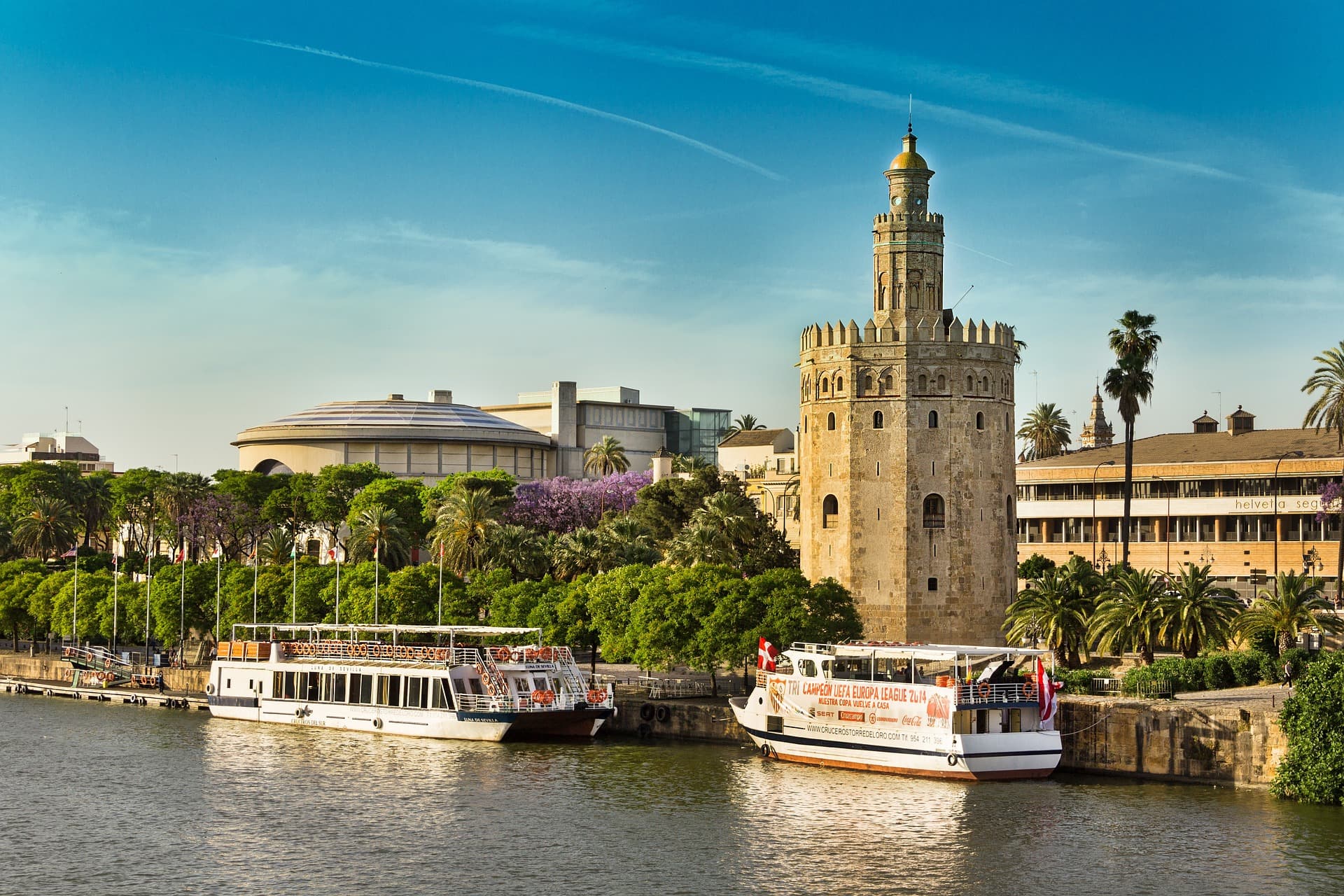
Triana is across the Guadalquivir, over the Puente de Isabel II, the bridge everyone calls the Triana bridge. This is where we would rather you eat. Calle Betis faces the river and is the evening walk, with the Torre del Oro visible on the Seville bank and the cathedral behind it. Calle Pureza runs inland through the old ceramic quarter. Mercado de Triana is a neighborhood market that still sells food, which is more than can be said for every pretty hall in Andalusia. The tile shops around Calle San Jorge, Santa Ana among the old names, are the place to look at azulejos if you want an object and not a magnet. Sleep in Triana if the hotel is a short walk from the bridge. Sleep in Santa Cruz if that pin is better. Do not sleep out by the airport, or in a complex that needs a taxi for every orange tree, and expect the city to feel easy.
The Alcázar, the Giralda, and the morning you should not build
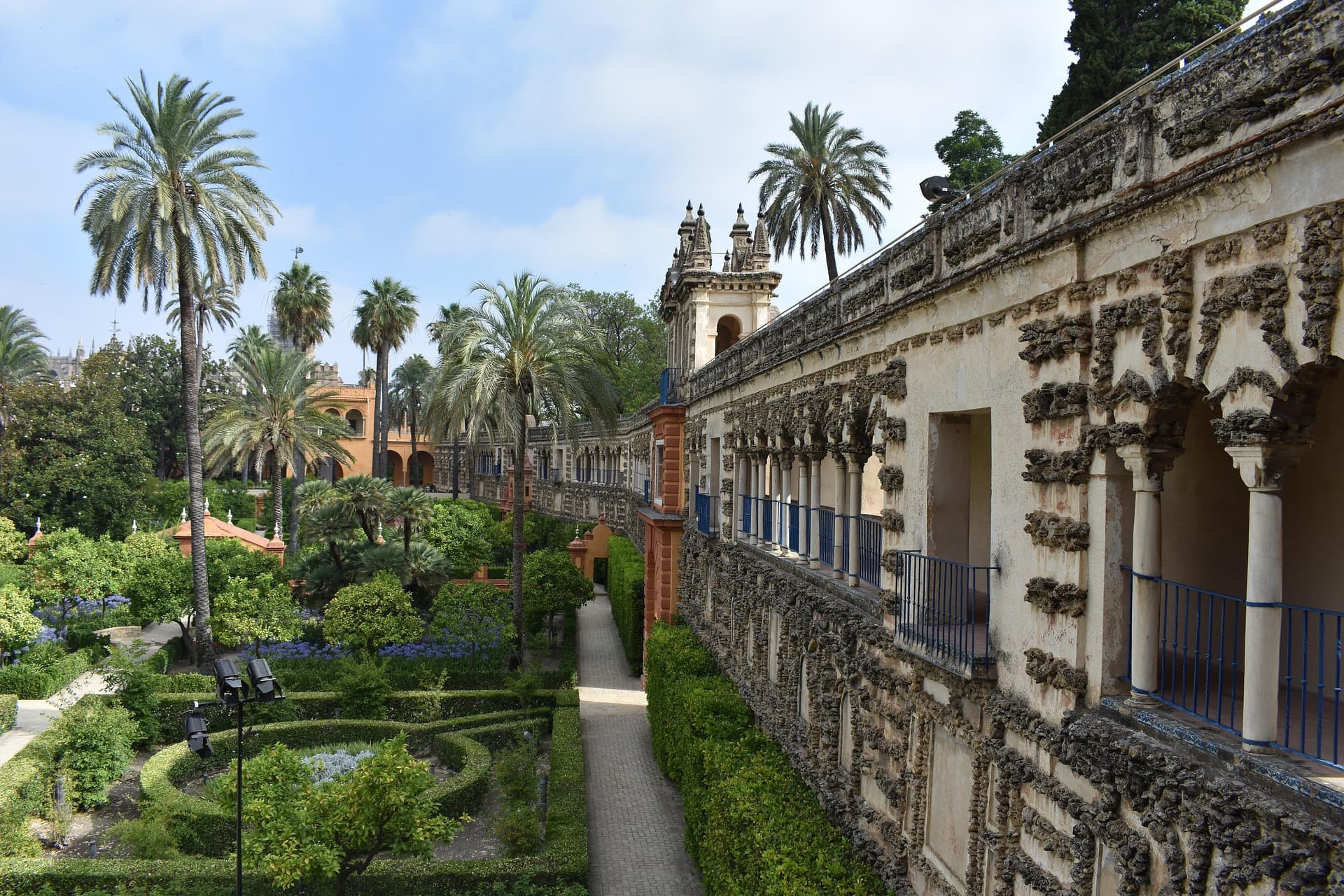
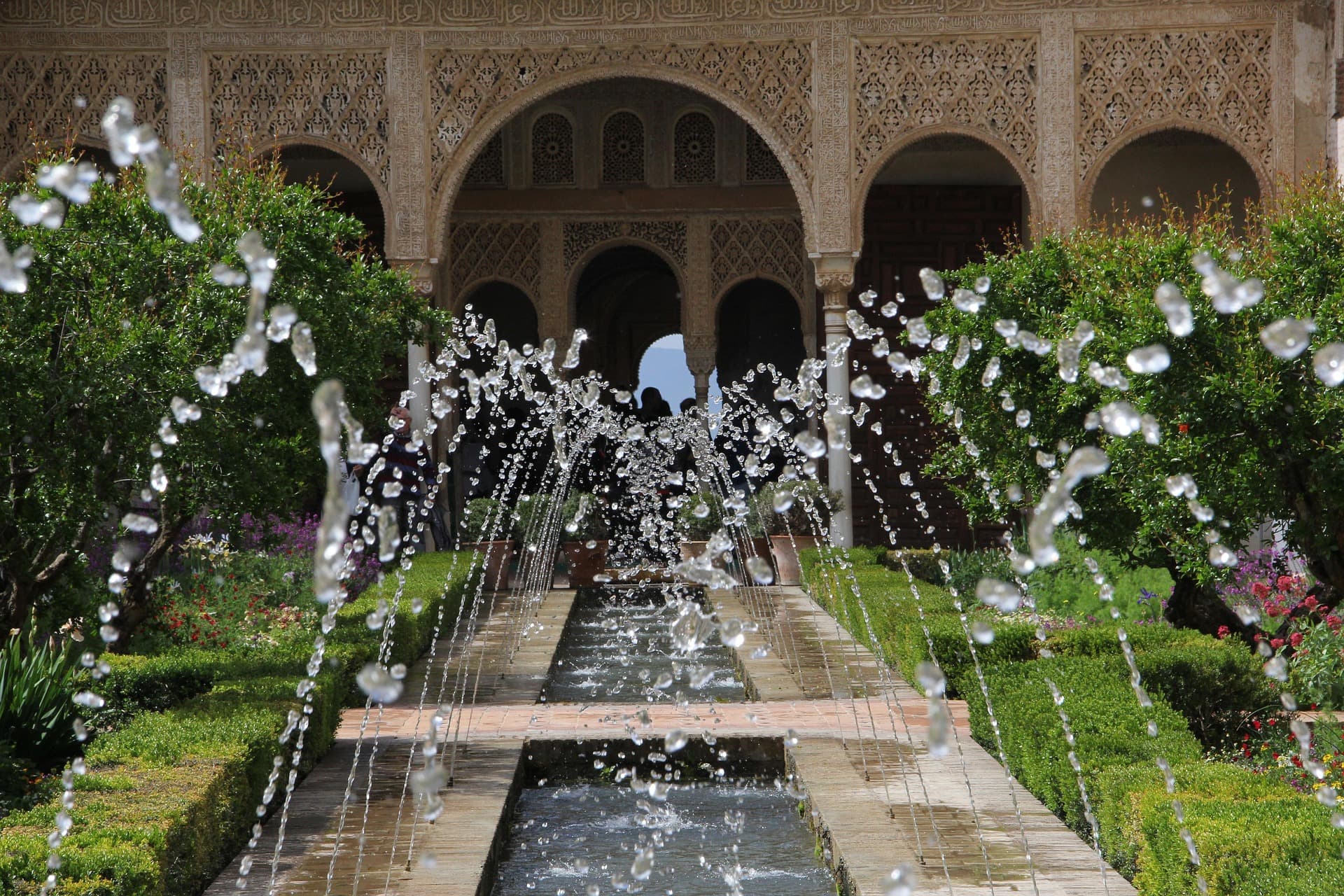
The Real Alcázar is the building. Book a timed ticket on the official site, and in spring, during Holy Week, and in the weeks of the Fair, book it early. The palaces come first while your eyes are fresh: the mudéjar rooms, the Patio de las Doncellas, the long view lines through horseshoe arches. Then the gardens, which are large enough to be the rest of the visit and which people skip because they think the ticket ended at the last tiled hall. It did not. Give the gardens the time. In July and August, the opening slot is the one that still feels like a pleasure. A noon entry is the palaces at the hour when the courtyards stop helping you.
The cathedral and the Giralda are the other morning, or the late afternoon if the day’s hours allow a second opening. Confirm those hours. The cathedral often shuts for a long midday break, and a plan that says “we’ll go in after lunch at 2” is a plan to stand on the Avenida de la Constitución looking at a closed door. The Giralda is a ramp, not a staircase, built so a horse could climb it. The view from the top is the city you are about to walk. Inside, the tomb associated with Columbus is what the crowd came to see. See it, then look at the scale of the nave and leave before you are doing penance. A combined cathedral ticket sometimes includes the Church of El Salvador. Read the current inclusion on the cathedral’s own site and confirm the price there. Do not buy the climb from a sidewalk tout on the Constitution.
Do not put the Alcázar, the cathedral, the Giralda, and Itálica in the same morning. Itálica is the Roman city at Santiponce, about twenty to thirty minutes north, and the amphitheater is the reason to go. It is an easy morning by taxi or by the bus from Plaza de Armas, and it is a gift on a day when you are not also due at a timed palace. On a day when you are, it steals the gardens. Choose. A first Seville stay that has two full days can do the Alcázar on one morning and the cathedral on the other, with Itálica only if a third morning exists or if one of those monuments genuinely does not interest you. Most people who say they will “swing by” the amphitheater after the Giralda arrive in Santiponce cross, late, and tired, and they walk the top of the seating without seeing it.
Plaza de España, María Luisa, and one look from the Setas
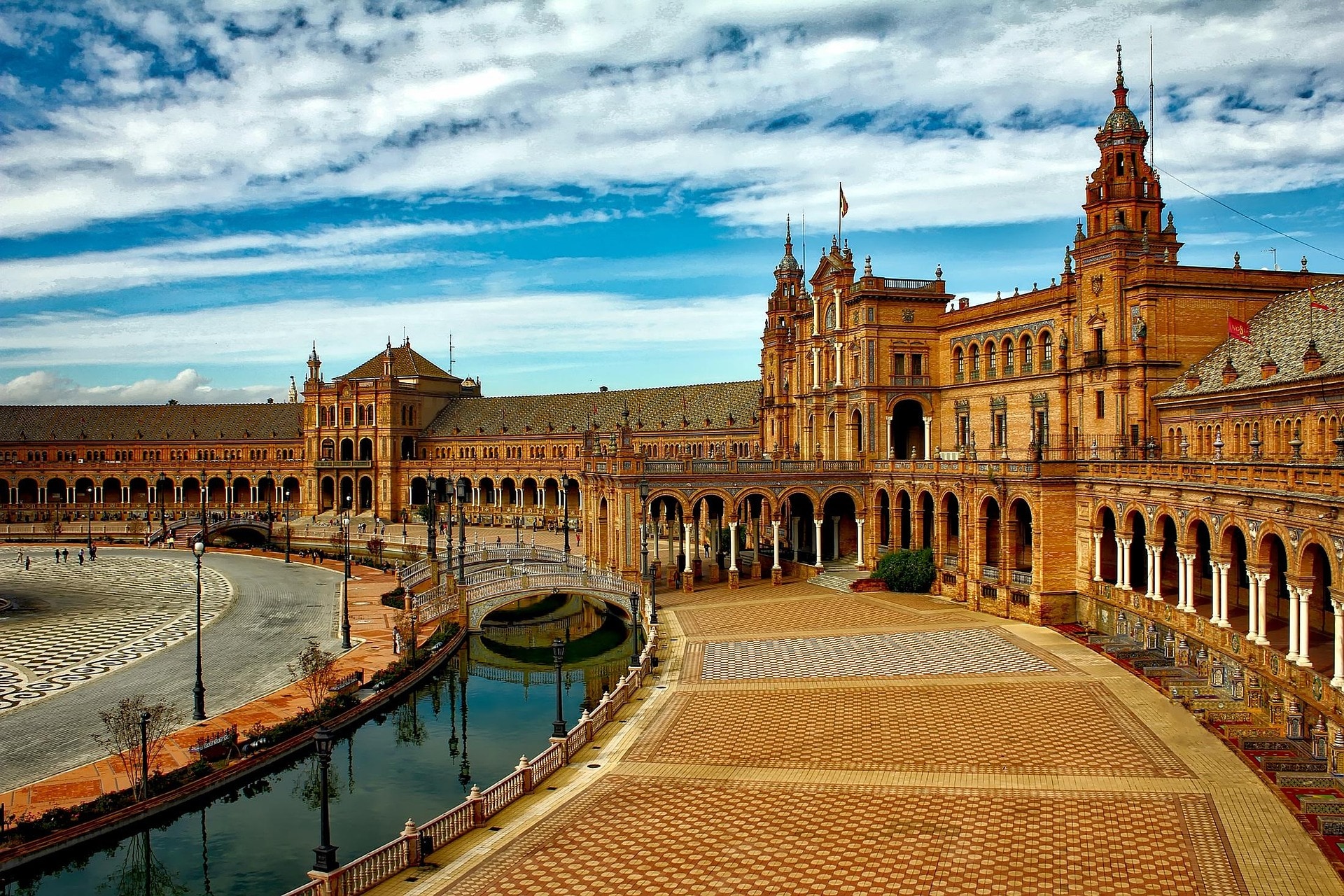
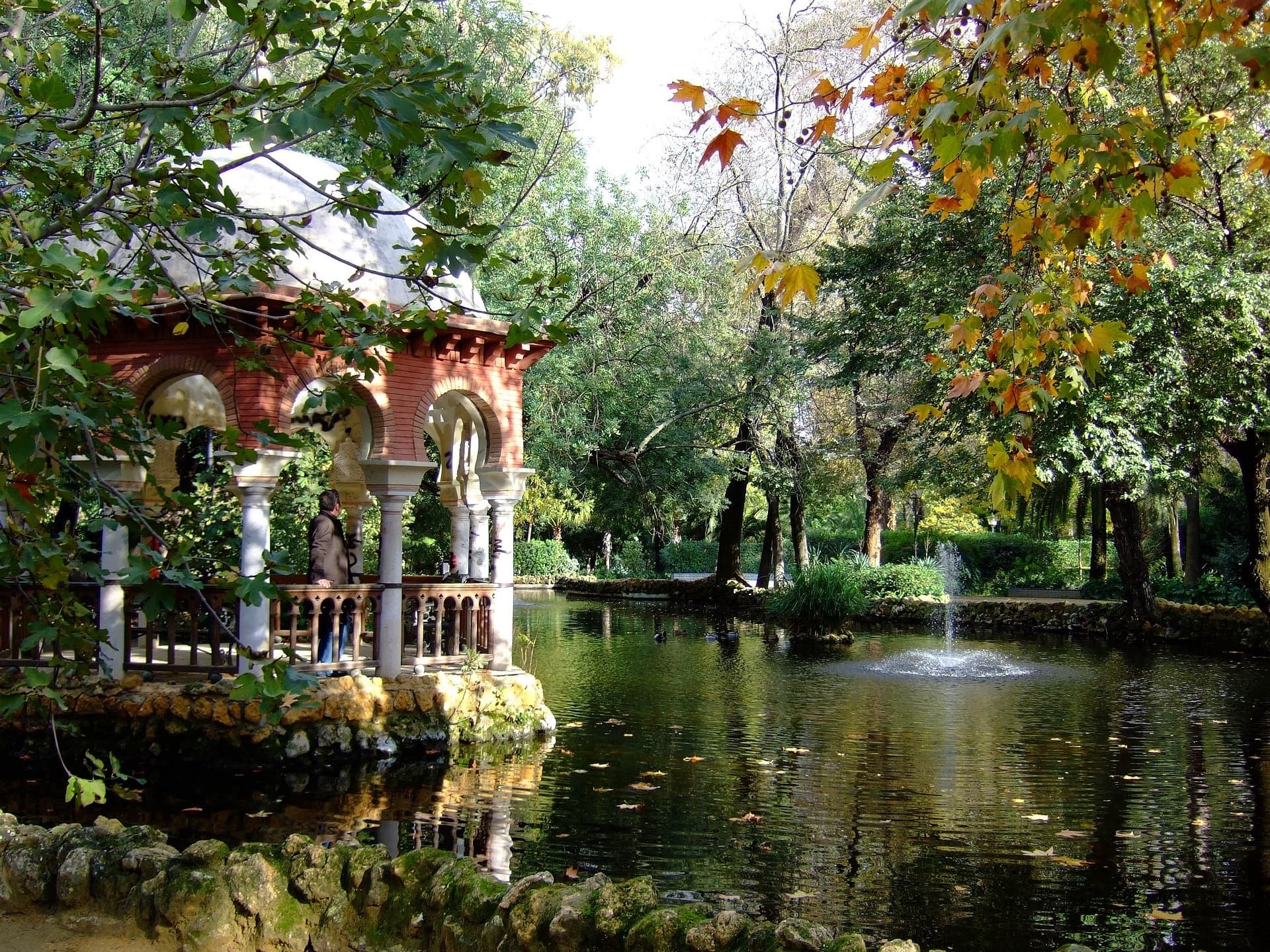
Plaza de España sits inside the Parque de María Luisa, and it needs the second half of a day, ideally late. The semicircular building, the canal, and the tiled alcoves — one for each Spanish province — are the pleasure. You can rent a small boat and you do not have to. The park around it is a real park, with long paths, the archaeological museum, and the museum of arts and customs. Those museums are worth it only if you have already dropped a monument that morning. A “quick look” at the plaza plus both museums plus the Alcázar is the same mistake as Itálica, wearing a different hat. Go when the light is lower. In summer the gravel throws heat back at your shins; this is an evening place from June onward.
The Metropol Parasol, which everyone in the city calls Las Setas, stands over Plaza de la Encarnación. Walk up once, early or at the end of the day, and use it as a map: cathedral this way, river that way, the Macarena basilica farther north if you care about the Virgin and the processions. The market underneath is a market. The Antiquarium, the Roman level below, is there if you want stones and you did not go to Itálica. One visit is enough. It is an orientation, not a second Alcázar. On the way back toward the river, the Torre del Oro is the twelve-sided tower on the Seville bank. The small museum inside is optional. The walk from the tower across the Triana bridge at dusk is not optional if you have the evening free. That is the city’s best ordinary half hour.
Holy Week and the April Fair
Semana Santa in Seville is one of the great religious weeks in Europe, and it is also a week in which the map stops working. Brotherhoods process for days. The floats move slowly. Streets around the cathedral, through La Campana and Calle Sierpes, close for hours. A hotel booking that looked like a three-minute walk to dinner becomes a forty-minute negotiation with a crowd that did not come here for your restaurant reservation. The emotion is real. The logistics are real. Book the room long before you book anything else, or come another week. If you are here for the processions, let them set the day and put the Alcázar on the morning when your street is actually open. If you are here for the palaces, the week before or the week after is kinder, provided you have not slid into the Fair by accident.
Feria de Abril begins about two weeks after Easter. Confirm the official dates for your year, because Easter moves and the fair moves with it. The fairground is in Los Remedios, on the Triana side of the river, not in Santa Cruz. Most casetas are private. You can see the lights at night and the horses and carriages in the afternoon without an invitation, and you should, if you are in the city. You should not expect to wander into a stranger’s tent and be folded into the family. Hotels book out, taxis get scarce at the hours everyone leaves the fairground, and a monument schedule written for a normal Tuesday will fray. Come for the fair or come another week. Doing both “a bit of Feria” and a full Alcázar-and-Córdoba itinerary is how the week becomes a series of closed streets and a missed train at Santa Justa.
A summer day that survives the heat
From June into early September, treat Seville as a city with two outdoor shifts and a long indoor middle. A day that works: breakfast at the hotel; Alcázar at the opening slot; palaces, then as much garden as the heat allows; out before the worst of it. Lunch from about 2 to 4 in Triana, indoors, not on a terrace facing the cathedral’s stone. Order salmorejo, which Seville eats constantly even though Córdoba invented it: cold, thick, tomato and bread, finished with egg and ham. Or espinacas con garbanzos, spinach and chickpeas, often with cumin, a tavern plate that shows up on the tables that are not translating themselves for you. Pescaíto frito — small fried fish, sometimes cazón in adobo — is the other Seville lunch, especially if you are anywhere near a fryer that is proud of itself. Solomillo al whisky and a montadito de pringá are the evening tapas if you want the local canon rather than a generic tomato-bread.
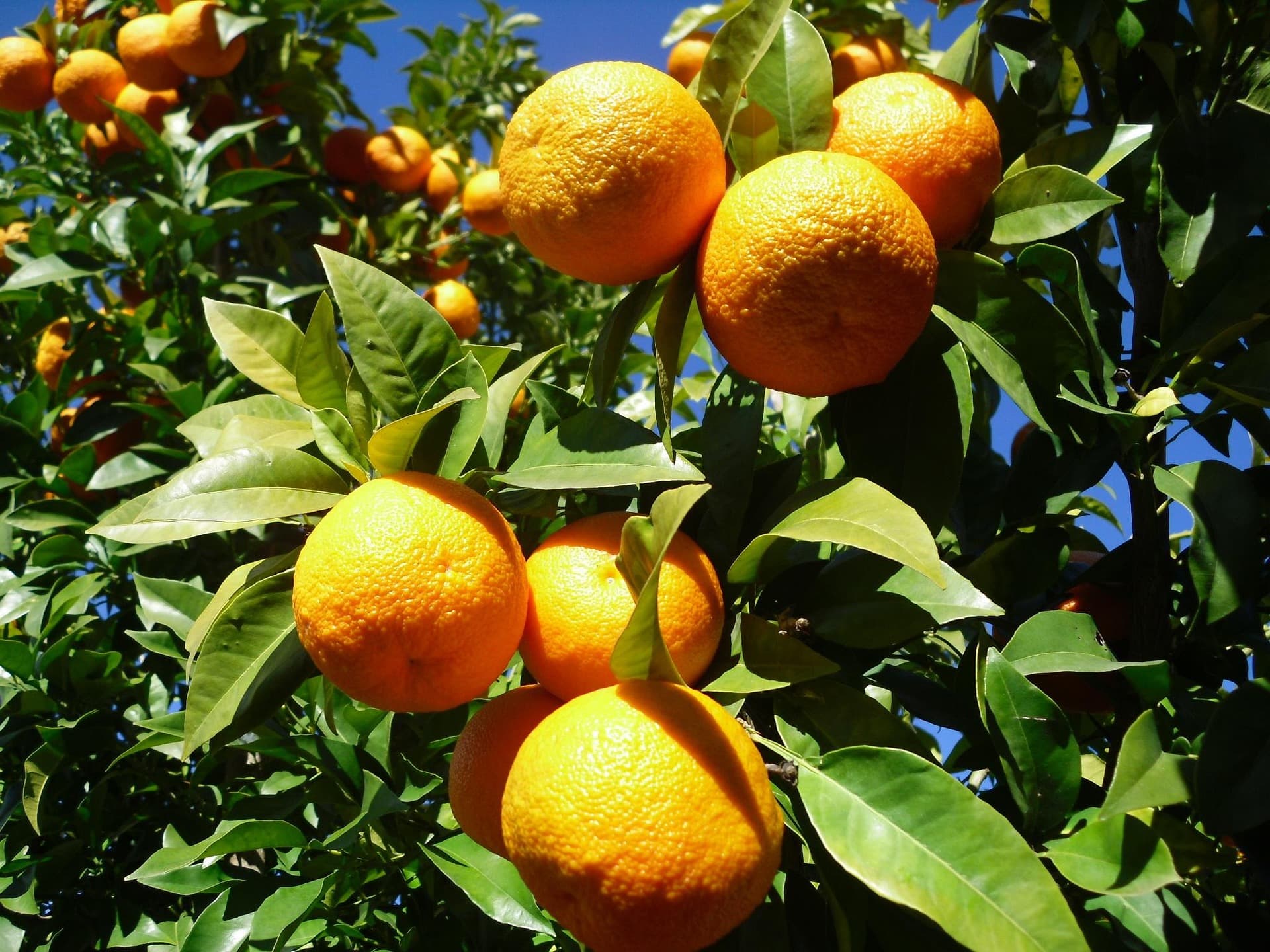
After lunch, go back to the room. This is not laziness. A 4 p.m. walk through Santa Cruz in August is how people get lightheaded and then blame the city. Come out after 8. Do Plaza de España if you missed it, or the bridge and Calle Betis, where the river air actually moves. Dinner after 9. The orange trees on the streets are lovely in every season; the blossom, azahar, is a spring event, often around Holy Week, and you cannot order it in August. In August you get the heat, the late light, and a city that knows how to be outside only when the sun has dropped. Take the hours it is offering.
"Two mornings in Seville, one for the Alcázar and one for the Giralda. Itálica only if a third morning is real."— Spain 360 trip notes
Flamenco without the sangria show
Seville is a serious flamenco city, and Triana is a serious flamenco neighborhood. That does not mean the door nearest your hotel is the right door. A peña is a club. Some nights are for members, some nights admit a few outsiders, and you do not demand a table at 8 because you are only in town until Thursday. A tablao is a room built for a performance: you sit, you watch, the point is the dance and the guitar and the singing. A dinner-show that leads with a pitcher of sangria and a fixed menu is a third product. People can enjoy it. It is not what we mean when we say you should hear flamenco in Seville.
We do not promise a specific venue in print, because the right room depends on who is on that week and whether a peña is open to non-members. Ask when you are here, or ask us when the dates are firm. Go for the show, not for the meal, and expect to be seated on time. A late arrival in a small room is not a fashion statement. If you only have one evening and you are exhausted from the Alcázar, skip it rather than sleep through the cante and decide you do not like flamenco. The art will survive you. Your memory of it will not.
Day trips that earn the hour, and the ones that do not
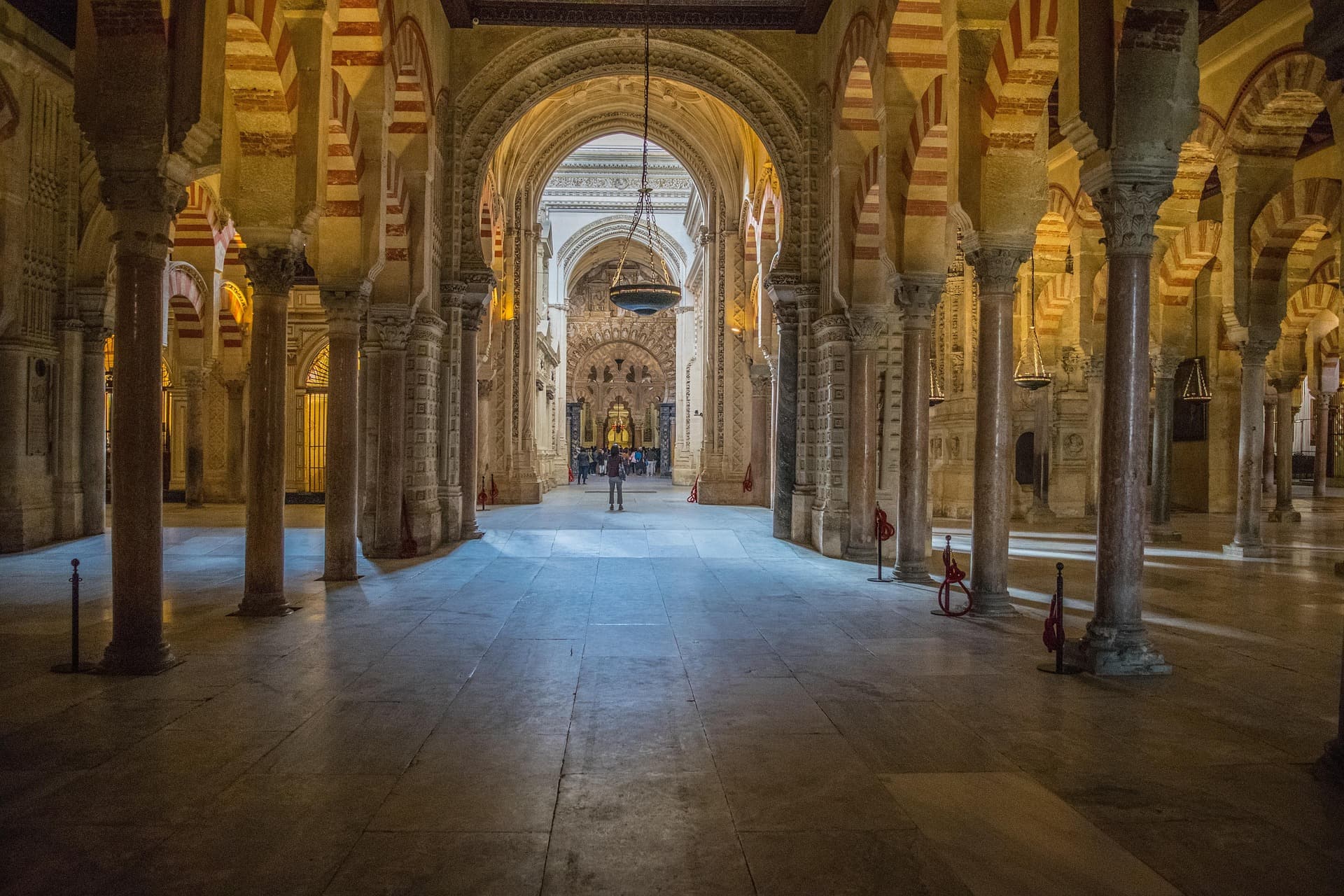
Córdoba is worth it, and it is not a two-hour stop. The Avant or AVE from Santa Justa takes about forty-five to fifty minutes. The Mezquita wants the opening slot and a real walk through the hypostyle hall, not a photo from the Puerta del Puente. If you have one day from Seville, leave early, give the mosque-cathedral the morning, eat salmorejo where it was born, see the gardens of the Alcázar de los Reyes Cristianos if the afternoon allows, and come back. You will not also see Medina Azahara. If you only have time to stand on the Roman bridge and turn around, stay in Seville and walk to Triana. You will have a better day.
Itálica is the easy add, on the conditions already set: its own morning, Santiponce, amphitheater, back for a late lunch. Carmona is the other short hop, a walled town about half an hour east, useful if you want a gate, a view, and lunch without committing to a mountain road. The white villages are a different trip. Arcos, Zahara, Grazalema, Ronda: these want a car and a driver and a full day, and they want you not to have an Alcázar slot at 9 the same morning. Classic Andalusia, the private week, is built around that road, with Ronda between Seville and Granada. Southern Spain Express does not pretend to do the villages and the three great cities in seven days. Pick the trip that matches the road you actually want.
Granada is the day trip we will argue you out of. By road it is on the order of two and a half to three hours each way, and the thing you came for — the Nasrid Palaces — is a timed entry you cannot be casual about after a morning on the highway. You would arrive tight, rush the Court of the Lions, skip the Albaicín, and get back to Seville too late to enjoy the city you are paying to sleep in. Sleep in Granada. Two nights is the minimum. Seville does not need to be jealous of that. It has its own two nights.
How a Seville stay sits inside the week
A shape that works on a first Andalusia week: arrive Seville, sleep two nights, Alcázar morning and Triana evening on day one of sightseeing, cathedral and María Luisa on the next, then Córdoba as its own day, then Granada for the palaces. Southern Spain Express runs a seven-day version of that idea with a cap of twelve: Madrid in, Seville, Córdoba, the Alhambra, Málaga out. The private Classic Andalusia week swaps the Madrid museum time for the white-village road and Ronda, and still keeps Seville at the start. In both cases Seville is a stay. It is not the station where you change for the south.
If you have only one night, because the flights were what they were, be honest about the cut. Do the Alcázar at whatever slot you could get, walk to the Torre del Oro and across to Calle Betis, eat in Triana, and leave the Giralda for the next trip. A single evening done on foot is a better memory than three tickets held in a panic and a cathedral you entered twenty minutes before it closed. The city is not going anywhere. Your timed entry is.
Confirm Alcázar and cathedral hours and the current ticket price on the official sites. Fair dates move with Easter.
| Morning you chose | What the rest of the day can hold | What breaks |
|---|---|---|
| Alcázar at opening | Gardens, long lunch in Triana, María Luisa late | Giralda plus Itálica plus a noon train to Granada |
| Cathedral and Giralda at opening | Lunch, a slow Santa Cruz hour, Setas at dusk | A second full palace the same morning |
| Itálica in Santiponce | Back by lunch, river walk, evening flamenco if you still want it | Any timed Alcázar slot before 1 p.m. |
| Train to Córdoba, about 45–50 minutes | Mezquita at opening, lunch, back to Seville or on to Granada | A photo on the Roman bridge and a claim that you saw the city |
| Feria or a Holy Week procession | Whatever street is actually open | A normal monument checklist written in February |
- Calle Betis at dusk, looking back at the Torre del Oro and the cathedral, is the walk.
- Espinacas con garbanzos, salmorejo, and pescaíto are the plates. The cathedral square is the wrong dining room.
- Flamenco: a peña or a serious tablao. Ask what is on. Skip the sangria package.
- Plaza de España is late-day. The park is big. Do not add both museums inside it.
- Las Setas once, for the map, from Plaza de la Encarnación.
- Do not day-trip the Nasrid Palaces from a Seville breakfast.
Seville is the city in Andalusia where people try to do the most and feel the least. Give it the nights, give the Alcázar the cool hour, eat on the far side of the bridge, and let Córdoba and Granada have their own mornings. That is the week. The fair and Holy Week are magnificent when they are the reason you came, and they are a crowd when they are not. Choose before you land at Santa Justa.
Plan Your Spain Trip
Talk with our Spain-based team about small-group departures, private itineraries, and straightforward travel from the US—we handle the details.
Contact UsRecommended Journey
Southern Spain Express
Seven days, twelve guests at most: into Seville from Madrid, time for the Alcázar, Córdoba as its own day, the Alhambra in Granada, and out via Málaga. The cuts are already made.
View the itineraryExpert's Tip
In summer, take the Alcázar at opening and eat lunch in a dark room in Triana. Plaza de España can wait until the gravel stops radiating.
Get the Soul of Spain in Your Inbox
Join our curated list for exclusive travel stories, hidden jazz venues, and expert guides delivered once a month.