Extremadura Birding: Monfragüe, Trujillo, and the Plains
12 min read
Monfragüe is the gorge where the Tagus and the Tiétar cut through a ridge of quartzite, and it is one of the few famous Spanish bird places where you can do an honest morning from a public viewpoint with your own car. Griffon vultures at Salto del Gitano, the cliff also called Peña Falcón, are the reliable part. A Spanish imperial eagle is possible and never guaranteed. Around the park, the dehesa of holm oaks is jamón country, and Cáceres is where Torta del Casar is a lunch you eat with a spoon. The crane spectacle is a different map: the plains and reservoirs, roughly December to February, not the gorge itself. Three days, based in Torrejón el Rubio, Trujillo, or Cáceres, is enough to hold those landscapes apart.
The park, the two rivers, and the oak country
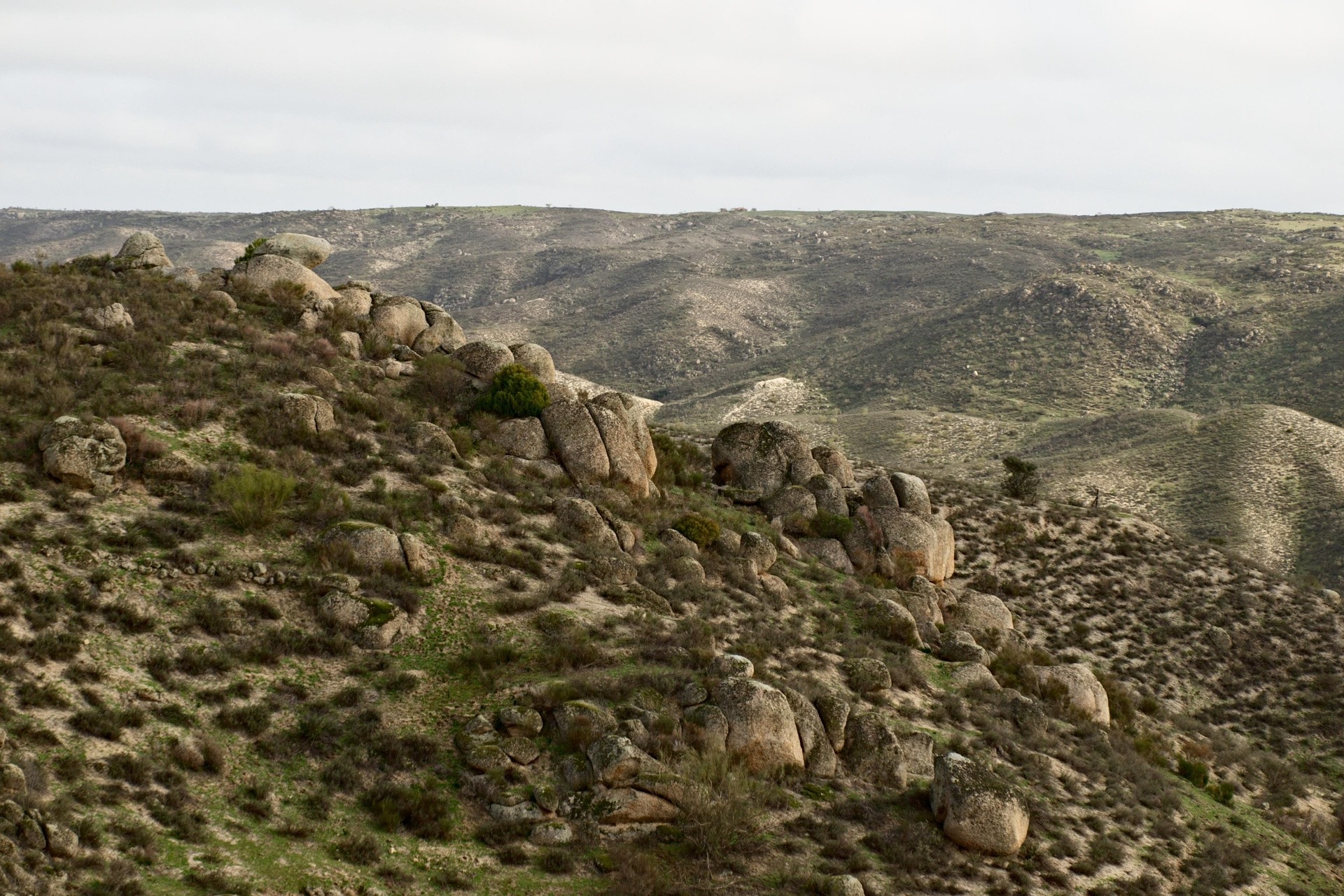
Parque Nacional de Monfragüe is small enough to drive across and large enough to waste if you treat it as a checklist. The Tagus, the Tajo on Spanish maps, runs under the castle ridge. The Tiétar comes in from the east and meets that system at cliffs you watch from lay-bys, not from a hide you booked online. Villarreal de San Carlos is the tiny village inside the park, with the visitor center and a place to drink coffee when the rocks have had enough of you. The habitat on either side of the gorge is dehesa: holm oaks pruned and spaced, grass or dry gold underneath, Iberian pigs when the farm is working that pasture. Azure-winged magpies use those oaks. So do hoopoes in the warm months. The gorge is the raptor theater. The dehesa is the ordinary wealth of the province.
You can bird the main viewpoints without a guide. The pull-offs are signed, the castle path is obvious, and griffon vultures at Peña Falcón do not require an introduction. A guide still changes the eagle hours. Spanish imperial eagles nest in the park in small numbers, the cliff they use can shift, and the right place to stand is a judgment about distance and disturbance, not a pin that never expires. We do not invent hides. Monfragüe is miradores, bridges, and roadsides. If someone sells you a private cabin hide inside the national park for a guaranteed imperial, walk away. The honest version is a scope, a wait at Portilla del Tiétar, and a person who knows whether that wait is still fair to the bird this year.
Where to stand
Start at Salto del Gitano. The parking area faces Peña Falcón, and the griffon colony is the one promise this park can keep in ordinary weather. Birds leave the ledges in the morning as the air starts to lift, and they come back to it through the day. You are often looking at vultures at something like eye level, which is why beginners suddenly understand wingspan. Egyptian vultures use the same cliffs in the breeding season and are gone in winter. A black stork on a ledge is a spring and summer possibility, not a winter one, and not a sure one. Give this rock the first good hour. Do not arrive at noon in July and decide the park is empty because everything is high and heat-hazed.
The castle of Monfragüe is a short, steep walk from the road, with the Tagus below and a view that explains the ridge. In April it is a pleasure. In August the same steps at midday are a bad idea if anyone in the car handles heat poorly. Mirador de la Tajadilla is the next classic stop, a smaller cliff and bridge scene where black storks are often the hope in season and griffons are again the likely bird. Portilla del Tiétar is the imperial stakeout: cliffs across the water, a place to set a scope, and a real chance of Spanish imperial eagle that remains a chance. You may instead spend forty minutes on griffons, a peregrine, or nothing but rock. That hour is still the right use of a guide. Nests are not approached. If the pair is elsewhere, you do not go find the elsewhere.
Bases: a village, a square, or a walled town
Torrejón el Rubio sits just south of the park and is the practical bed if you want two dawns at the rocks without a long drive. It is a village, not a resort. Dinner is whatever is open, and an early breakfast is something you arrange, not something you assume. Trujillo is the more beautiful base: about three-quarters of an hour to Salto del Gitano in ordinary traffic, a Plaza Mayor worth the evening, and lesser kestrels on the old-town roofs from spring into summer. Cáceres is the night you sleep somewhere frankly gorgeous, inside or beside the old town, with a longer start in the morning and Torta del Casar waiting at lunch. Pick one base for the nights. Changing hotels between Torrejón, Trujillo, and Cáceres on a three-day trip spends the birds on baggage.
From Madrid, Trujillo is roughly three hours by the A-5. Traffic, roadworks, and a Friday afternoon change that number, so do not book a lunch in the Plaza Mayor that assumes you left the capital at nine and met no trucks. Cáceres is a little farther on the same axis. The park is not a day trip from a Madrid breakfast. Leave in the morning, be in Trujillo for a late lunch or an early afternoon walk, and put Monfragüe on the next day’s dawn. If you are coming from Seville, the drive is another serious half day. Extremadura is its own block of the map. On a longer Spain 360 route we treat it that way, rather than gluing it to a Doñana morning.
- Day one: Madrid to Trujillo, roughly three hours. Plaza Mayor in the afternoon. Lesser kestrels if the month is spring or summer. Sleep in Trujillo.
- Day two: Monfragüe. Salto del Gitano first, then castle or Tajadilla as heat allows, then a real wait at Portilla del Tiétar. Coffee in Villarreal de San Carlos. Sleep in Torrejón el Rubio for another dawn, or in Cáceres for the old town.
- Day three in December, January, or February: cranes on the plains around Navalmoral de la Mata, Gabriel y Galán, or Alcollarín. Do not look for that spectacle in the gorge.
- Day three in spring: a careful roadside look at the Cáceres plains if bustards are the hope, then lunch in Cáceres. Stay on public roads. Fields are not a footpath.
- Any season’s lunch: jamón from the dehesa and a spoon of Torta del Casar. That meal is the point of the middle of the day, not a distraction from a cliff at 2 p.m.
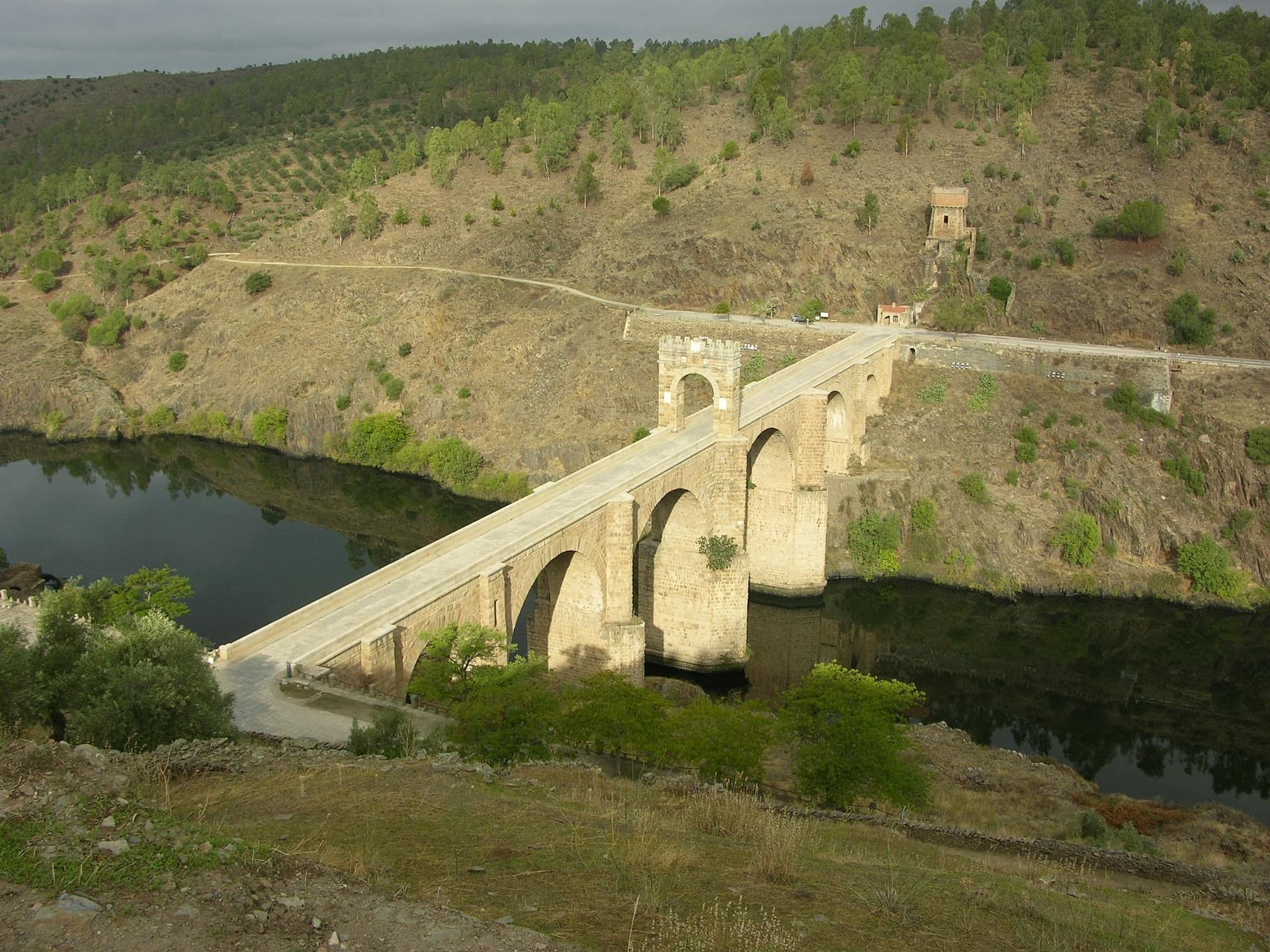
- The Roman bridge at Alcántara is a beautiful extra west of Cáceres if the birds are done. It is not a raptor site, and it should not eat a crane morning.
Trujillo’s roofs, Cáceres at night
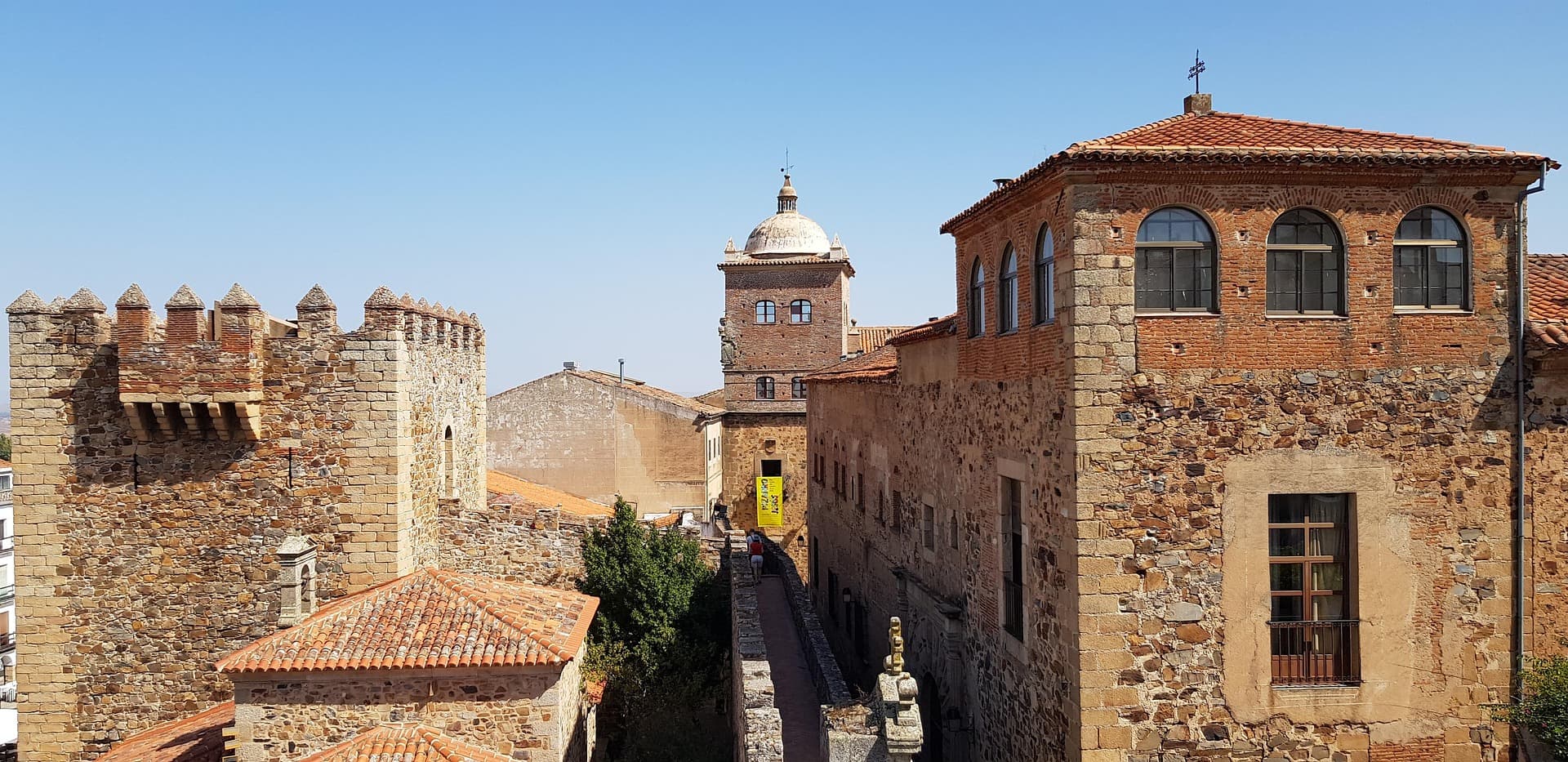
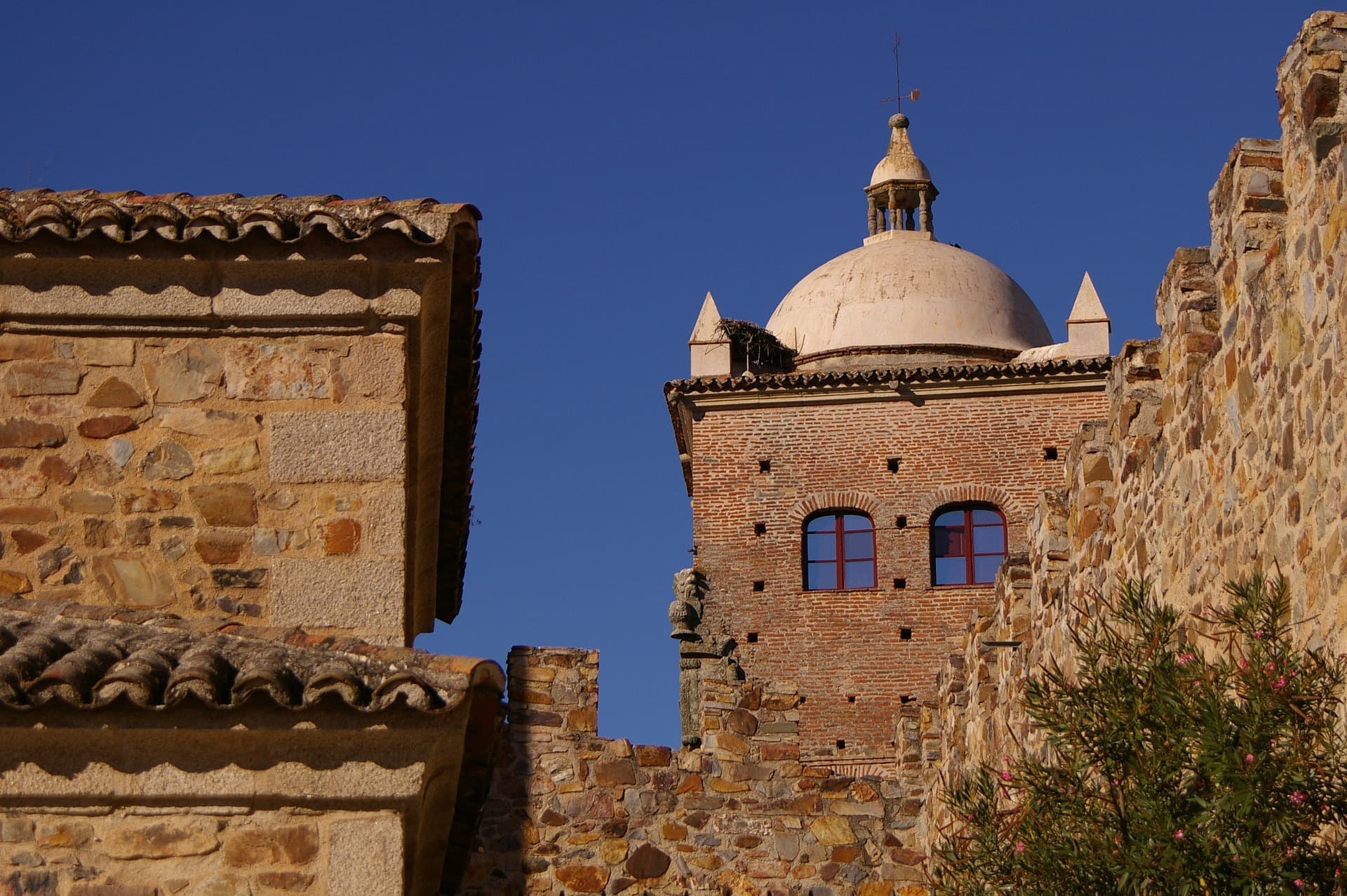
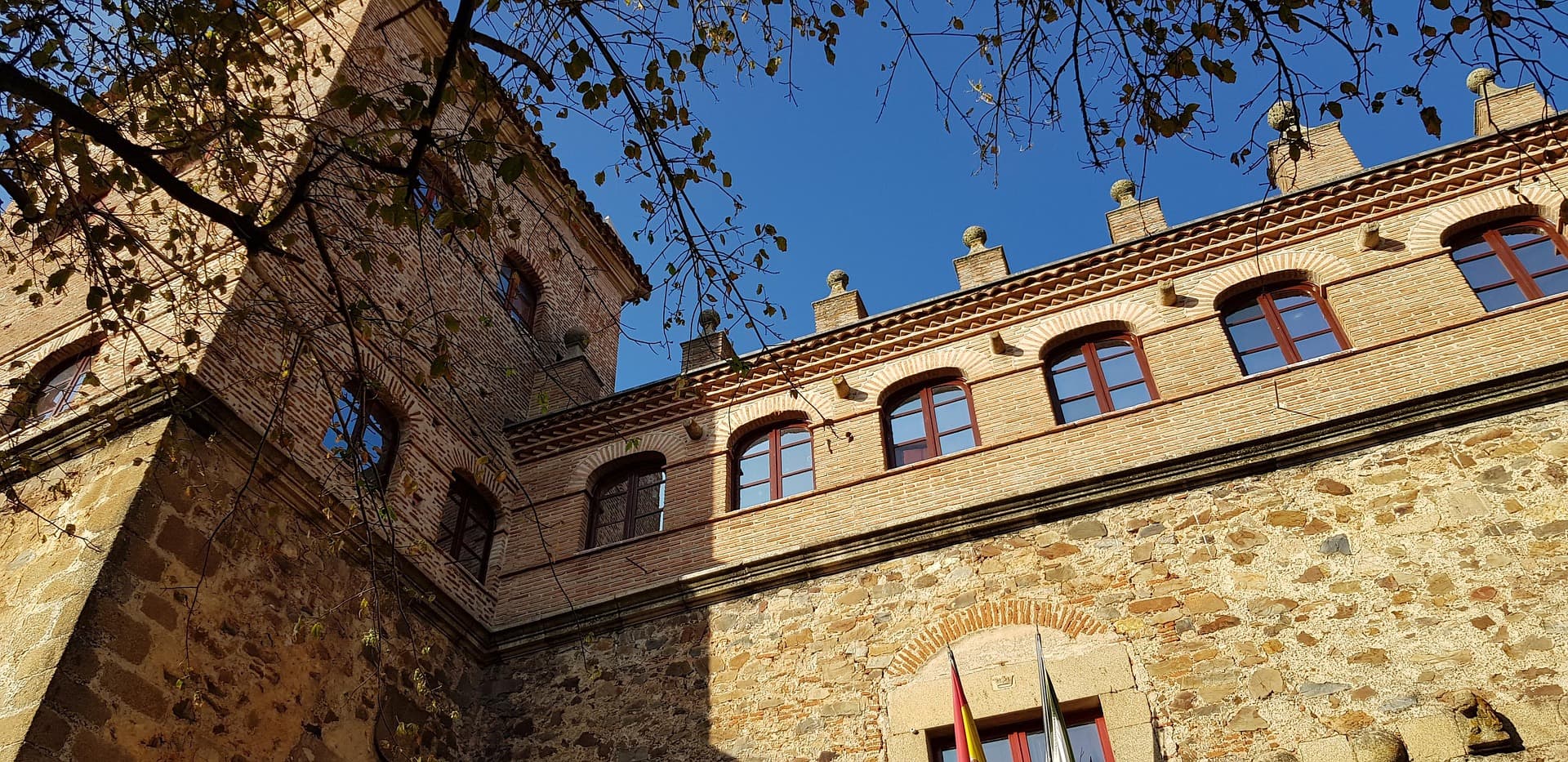
Trujillo’s Plaza Mayor is the square with the weight of a conquistador town, and in season it is also a lesser kestrel colony. The birds nest in cavities in churches and old roofs. Late afternoon and evening, when they return, is often better than a rushed noon. They are migrants. A January walk under those roofs will not produce them, and a guide who tells you so is saving you an hour. The castle above town is a walk for the view over the dehesa. Combine it with the square, not with a promise of imperial eagles over the rooftops. Imperial habitat is the quieter country and the park, not the café tables.
Cáceres old town is the night you stay if the trip should feel like more than a bird route. Stone lanes, lit squares, and a dinner that can include the local ham without a performance. Sleep there when the next morning can start a little later, or when day three is cheese, the old town, and the drive back toward Madrid. Montánchez, south of the city, is ham country and a castle on a ridge if you want the dehesa explained in one detour. It is not a substitute for Peña Falcón. The bridge at Alcántara is the same kind of choice: Roman stone over the Tagus, worth it when the day’s birds are already in the notebook, foolish if it steals the only calm hour on the plains.
Plains and gorge are not the same outing
Split the days. Vultures in the gorge, kestrels in Trujillo in season, cranes on the plains only in winter.
| Place | What you can reasonably want | When it is the right day |
|---|---|---|
| Salto del Gitano / Peña Falcón | Griffon vultures, close and dependable | Year-round. Morning light. The first stop, not the afterthought. |
| Portilla del Tiétar | A chance of Spanish imperial eagle, plus whatever else uses the cliff | Breeding season is the classic wait. Never guaranteed. A guide earns this hour. |
| Trujillo old town | Lesser kestrels on the roofs, and Plaza Mayor itself | Spring and summer for the kestrels. The square is worth it in any month. |
| Navalmoral, Gabriel y Galán, Alcollarín | Common cranes on the plains and reservoir country | December to February. Not in the Monfragüe gorge. |
| Cáceres | The old town at night, Torta del Casar at lunch | Any month. Let lunch be lunch. Do not schedule it on a rock in the sun. |
Common cranes winter in parts of Extremadura from about December through February. The places people mean are the open country around Navalmoral de la Mata, the Gabriel y Galán reservoir side, and Alcollarín, among other plains and farm reservoirs. You scan fields and edges from roads and known pull-offs. Flocks feed on the ground and flight lines move at dawn and dusk. None of that is a show you watch from Salto del Gitano. The gorge in January is still excellent for griffon vultures and can still produce an imperial if you are lucky and patient. It is the wrong address for the crane spectacle. If your dates are a winter week, give the plains their own day. If your dates are May, do not come for cranes. They have gone north.
Spring activity, summer heat
Spring is the breeding park. Griffons are obvious, Egyptian vultures have returned, black storks are on cliffs if they are on cliffs, and the imperial question is alive at Portilla. Lesser kestrels are back in Trujillo. The dehesa has hoopoes and the full noise of a Spanish April. This is the season we would choose for a first Extremadura bird trip if cranes are not the specific goal. You still do not get a guarantee on the eagle. You do get a park that is doing more than soaring in circles over an empty winter cliff.
Summer heat in Extremadura is the other fact. July and August regularly push through the mid and high thirties Celsius, and a bad afternoon goes further. Bird from dawn until late morning. Use the hot hours for Cáceres shade, a long lunch, and a dark room. The castle ramparts at 3 p.m. are how people get sick, not how they see vultures. Carry more water than a city day in Madrid would suggest. If you only have August, we will still build a legal, early, realistic route. We will not pretend Peña Falcón at lunchtime is the famous photograph.
Jamón and cheese are the lunch, not a sideshow
The dehesa under the holm oaks is why ibérico ham exists in this province. Order a plate of jamón at lunch in Trujillo or Cáceres and eat it as the meal’s center, with bread and a tomato, not as a tourist packet from a highway rack to be dealt with in the car. A plate is the experience. The label matters: ibérico de bellota means an Iberian pig finished on acorns, and it costs more than ordinary serrano. You do not need a whole leg. You need one honest serving while you are standing in the landscape that produced it.
Torta del Casar is the cheese, from the country just outside Cáceres. It is sheep’s milk, set with thistle, and when it is ready the center is almost liquid. You cut the top and spoon it onto bread. A firm wedge in plastic can be real DOP cheese and still miss the point. Sit down in Cáceres and order it. This lunch is not a failure of discipline against the birding. The middle of the day in summer is unusable on the rocks, and the middle of the day in winter is a fine time to stop driving the plains. Great bustards, if you look for them on the Llanos de Cáceres in spring, are watched from the road. You do not walk into the fields to follow one. Then you go to town and eat.
"Griffon vultures at Salto del Gitano are the sight Monfragüe can repeat. A Spanish imperial eagle is why a guide is still worth the day. Cranes, in winter, are a plains drive, not a gorge."— Spain 360, on Extremadura
Put the pieces in the right drawers and Extremadura is simple. Roughly three hours from Madrid to Trujillo, then a night there so Monfragüe gets a dawn. Griffons at Peña Falcón. A patient, unpromised hour for Spanish imperial eagle at Portilla del Tiétar. Lesser kestrels on Trujillo’s roofs only in their season. Cáceres when you want a beautiful night and a spoon of Torta del Casar. Cranes around Navalmoral, Gabriel y Galán, or Alcollarín from December to February, and not from the castle wall. Summer belongs to early starts. No invented hides, no eagle called in with a speaker, no attempt to see the whole province between breakfast and a flight. That is a full birding trip. It is also a good table.
Plan Your Spain Trip
Talk with our Spain-based team about small-group departures, private itineraries, and straightforward travel from the US—we handle the details.
Contact UsRecommended Journey
Spain Birdwatching & Wetlands Safari
The wetlands safari is the longer birding route we run. Monfragüe fits a dedicated Extremadura block: viewpoints for vultures, time for eagles without a guarantee, and the plains only in the months the cranes are actually there.
View the itineraryExpert's Tip
Give the first hour at Salto del Gitano to the griffon vultures. Treat a Spanish imperial eagle at Portilla del Tiétar as luck plus local knowledge, and in December go to the plains for cranes, not to the gorge.
Get the Soul of Spain in Your Inbox
Join our curated list for exclusive travel stories, hidden jazz venues, and expert guides delivered once a month.